
Does Your Home Insurance Cover Roof Damage? How to File a Claim and Replace Your Roof
I’ve been the guy on your roof after a bad storm, assessing damage and talking with insurance adjusters. If you’re staring at a damaged roof and worried about the bill, I can help you understand your coverage and next steps.
I’ll explain what roof damage home insurance typically covers, show you how to file a claim the right way, and guide you through the roof replacement process with your insurer.
Key Takeaways: What Every Homeowner Needs to Know First
Before you even think about filing a claim, get these core truths straight.
- Your coverage depends entirely on the “cause of loss.” Did it happen in an instant, or over twenty years? That’s the first question your adjuster will ask.
- Your homeowners policy is a contract for sudden disasters, not a warranty for an aging roof. It’s not there to pay for a roof that’s simply worn out from sun and rain.
- You will always pay your deductible first. Know this amount. On a $15,000 roof with a $1,500 deductible, your insurance pays $13,500.
- Claims take time. From inspection to final payment, it can be weeks. You’ll need temporary repairs fast, and that’s often on you upfront.
- If your roof has collapsed or has major structural damage, safety is the only priority. Stay out of the area and call for professional help immediately.
What Home Insurance Actually Covers: Sudden Damage vs. Slow Decay
Think of your insurance like a safety net for a sudden fall, not a cure for a bad back you’ve had for years.
The rule is “sudden and accidental” versus “wear and tear.” A tree branch crashing through your roof in a storm is sudden. Twenty summers of sun slowly baking the asphalt off your shingles is wear and tear.
Does Home Insurance Cover Roof Damage and Collapse? Yes, but only if the cause is a covered peril that happens suddenly. A roof collapse from a massive, unexpected snow load is typically covered. A collapse from dry rot that developed over a decade is not.
Are roofs covered by homeowners insurance for specific events? Generally, yes, for perils named in your policy like wind, hail, fire, or a falling object. But there’s a catch.
You’ll hear two terms: Actual Cash Value (ACV) and Replacement Cost Value (RCV). ACV is the value of your old roof minus depreciation. If your 20-year shingles get hailed on, they might only be valued at 20% of their original cost. RCV pays to replace it with a new one of similar quality, often after you prove the work is done. Know which one your policy has.
When You’re Likely Covered: The “Act of God” and Accidents
These are the events your policy is designed for. Coverage usually applies when the damage is direct and obvious.
- Windstorms that lift or tear shingles.
- Hailstorms that bruise or puncture roofing material.
- Impact from falling trees, branches, or other debris.
- Fire or lightning strikes.
- Vandalism, like someone intentionally damaging your roof.
Are flat roofs covered by insurance? Yes, the same rules apply. But adjusters look closely at flat roofs. If the damage is in an area of “ponding water” (where water sits for over 48 hours), they may argue it’s a maintenance issue, not a storm issue.
When You’re Probably Not Covered: Maintenance and Time
This is where most homeowner confusion and disappointment happens. Insurance companies call these “exclusions.”
- General wear and tear from age and weather exposure.
- Leaks or damage resulting from a lack of maintenance. If you ignored missing shingles and the decking rotted, that’s on you.
- Mold, fungus, or rot that happens slowly.
- Damage from birds, rodents, or insects.
Are roof nail pops covered by insurance? Almost never. Nail pops are typically a sign of the roof framing settling over years or an old installation issue, not a sudden event.
Cosmetic roof damage is a big one, especially with metal or certain shingles. If a hailstorm leaves dents in your metal roof but doesn’t puncture it, many policies now exclude that “cosmetic” damage. The roof still functions, so they won’t pay to replace it.
Your First Moves After a Storm or Collapse: Safety and Documentation
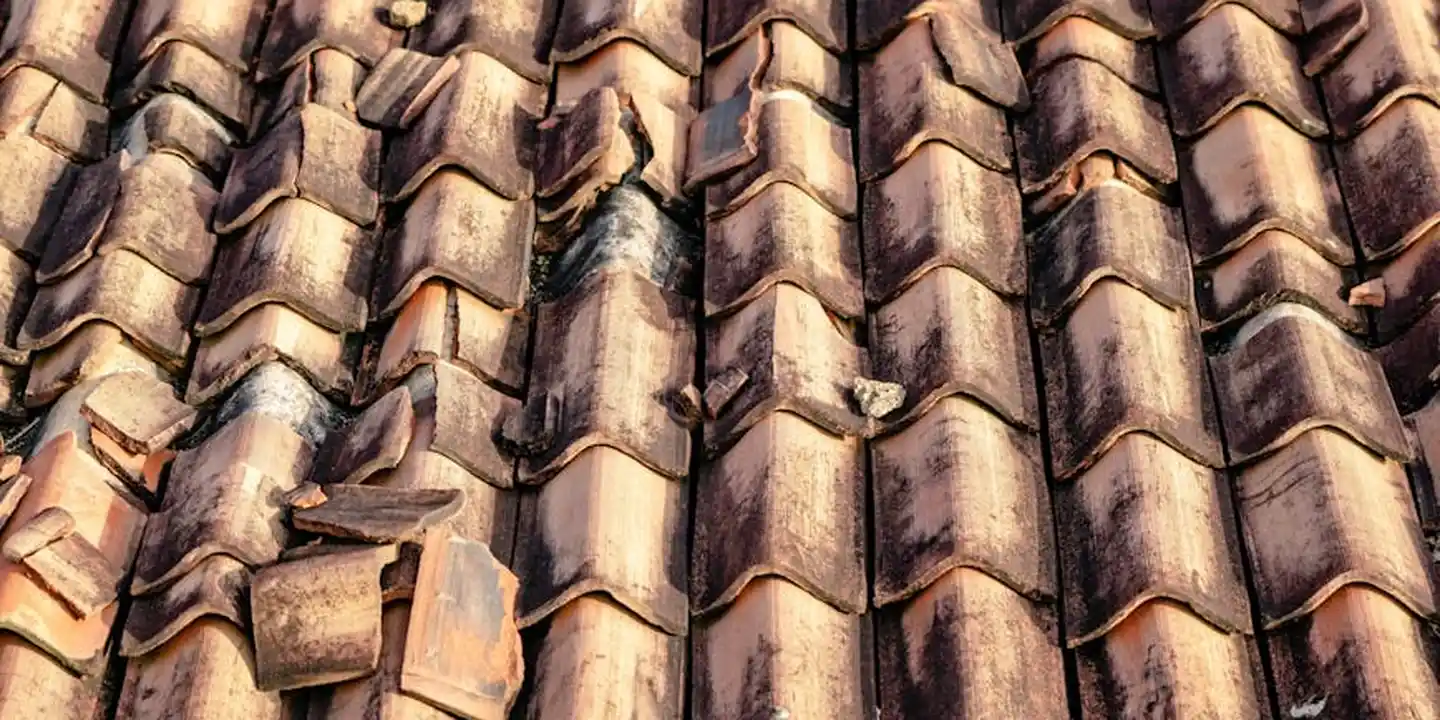
Your roof is damaged. Take a deep breath. The next few hours are about preventing more damage and building your case.
The first rule is always your safety; do not climb onto a damaged roof or enter a structurally unsafe attic. You are not a claims adjuster yet. You are the safety manager. Your goal is to stop the situation from getting worse and start gathering evidence, all from the ground.
Think of this as a two-part job: securing the site and creating a visual timeline for the insurance company. A calm, methodical approach here makes the entire claims process smoother.
Step 1: Secure the Area and Make Temporary Repairs
From the ground, look for hazards. Are there dangling gutters, loose shingles in the yard, or exposed nails? Clear what you can safely.
Your most important task is to stop water from getting inside, and using a heavy-duty tarp is the standard method. If you can safely access the roof’s edge from a tall, secure ladder, you can cover damaged sections. If the pitch is steep or the damage is severe, call a professional roofing company for a temporary tarping service.
Insurance policies often require you to take these “mitigation” steps. If you don’t, and more water damage happens, they could deny that portion of the claim.
This is a temporary fix only; do not let any contractor talk you into a permanent repair before the adjuster sees the damage. I’ve seen claims get messy when a roofer starts tearing off shingles before the insurance company has a look. The adjuster needs to see the original storm damage, not a construction site.
Step 2: The Documentation Drill-Down
Now, document everything. Your phone is your best tool. Start outside.
- Take wide-angle photos of every side of your house to show the overall roof.
- Zoom in on all damaged areas. Get close-ups of cracked shingles, missing pieces, and bent flashing.
- Photograph any debris on the ground, like granules or tree limbs.
- Don’t forget the gutters and downspouts for dents or detachment.
Next, move inside to the attic and upper floors.
- Photograph every water stain on ceilings or walls, even small ones.
- Take pictures of wet insulation or any active dripping.
- Place a tape measure or a coin next to stains in photos to show scale.
Create a simple written list describing each type of damage and its location. A short video walkaround of the property can also be very powerful for showing the full scope.
Keep every single receipt for tarps, lumber, or any materials you buy for temporary repairs; you can submit these for reimbursement. This paper trail proves you acted responsibly to protect your home, which the insurance company respects.
How to File Your Roof Insurance Claim Without Getting Shortchanged
Think of the insurance process as a negotiation where your evidence is your strongest tool. You must guide them to see the full picture of the damage.
Your goal is a settlement that pays for a complete, code-compliant roof replacement, not just a patch job. Organized documentation and a professional roofer by your side are your best defenses against a lowball offer.
Contacting Your Insurer and the Adjuster’s Visit
When you call, be clear and factual. Do not speculate.
Say something like, “I’m filing a claim for roof damage from the storm on [date]. I have multiple missing shingles and active leaks in two rooms.” Stick to what you can see and prove.
The insurance company will assign an adjuster. This person works for the insurer, not for you. Their job is to assess the damage and write an estimate for what the company will pay.
You must be present for the adjuster’s inspection, and if you can, have your chosen roofing contractor there too. A good roofer knows how to spot and point out hidden damage an adjuster might miss, like compromised decking or damaged flashing.
Walk with them. Point out every leak stain, every soft spot, every bent vent pipe. Show them your photos and notes from right after the storm. This is not the time to be passive.
Understanding the Estimate and Depreciation
The adjuster’s estimate will look confusing. It’s a line-item list of quantities and costs. Here is where you need your roofer’s quote to compare.
The insurance estimate often uses generic, lower-cost pricing for labor and materials. Your roofer’s quote will be specific to your local market and the exact products needed.
- Insurance line item: “Replace decking – 4 sheets.”
- Your roofer’s finding: “Need 12 sheets of decking due to widespread water rot.”
This difference is your first point of negotiation. You submit your roofer’s detailed quote as proof of the actual cost.
Then comes the tricky part: depreciation. Most policies pay out in two parts. First, they subtract depreciation from the replacement cost.
Think of it like your car’s value. A 10-year-old roof isn’t worth its original install price. They send you this depreciated “Actual Cash Value” payment first.
The second, much larger payment is for “recoverable depreciation.” You only get this money back after you prove the roof was fully replaced and the work is complete.
You must front the difference between the first check and your roofer’s bill. Once the job is done and you submit the final invoice to your insurer, they release the withheld depreciation money. This is how you get the full replacement cost value.
Never accept a settlement that only pays the depreciated value unless you are walking away from a full replacement. Your goal is to recover every dollar of that withheld depreciation to fund a proper, lasting repair.
The Repair vs. Replace Decision: A Roofer’s Cost-Benefit Verdict

Let’s get straight to the big question. Are roof repairs covered by home insurance? Yes, but only if the damage is sudden and accidental, like from a hail strike or a fallen tree. Insurance does not pay for fixes your roof needs just from getting old. I’ve seen too many homeowners learn this the hard way after a small leak turns into a denied insurance claim.
Think of it this way. If you patch a single shingle on a 20-year-old roof, you might stop that leak today. But the surrounding shingles are brittle and worn. A patch job on a failing roof is like putting a bandage on a broken arm, it ignores the bigger problem brewing underneath. You could spend money now only to face a full collapse later.
Here’s my Integrity & Lifespan Report from years on the job. A roof is a system. When one part fails, it often stresses the others. Before you decide, you need to know the true condition of the entire structure, not just the visible damage. Your insurance adjuster looks for a direct cause, but a good roofer looks for systemic failure.
Roof Integrity Assessment: When a Repair is a Waste of Money
Every roofing material has a clock. Standard asphalt shingles typically last 20 to 25 years. Wood shakes might give you 30 years if maintained, while concrete tiles can go 50. Understanding roof shingles lifespan helps you plan maintenance and budgeting across options. If your roof is near the end of its lifespan and has damage, repair is usually a temporary, costly bandage.
Look for these red flags that scream for replacement, not repair:
- Widespread deck rot. If I pull up shingles and the wooden decking feels soft or crumbles, the core structure is compromised.
- Multiple, random leaks. One leak at a vent pipe is one thing. Water showing up in different spots across your ceiling points to general failure.
- Severe granule loss on shingles, leaving bare asphalt exposed. Your roof is literally baking itself to death.
- A visible sag in the roofline. This is a critical structural warning sign.
Now, about tiles. Are roof tiles covered by building insurance for single tiles versus entire sections? The rule is the same. Insurance will cover replacing tiles smashed by a storm, but it will not cover tiles that are cracked from age or poor installation. If over 25% of a section is damaged, most codes require replacing the whole section for a uniform look and proper performance. Insurance should cover that larger repair if the cause is covered.
Repair vs. Replace Cost Tiers and the Insurance Payout
Let’s talk numbers so you know what you’re facing. Costs vary by region and roof complexity, but here are ballpark figures from my estimating sheets:
- Common Repairs: Fixing a leak around a chimney or vent: $300 to $600. Replacing a 10’x10′ section of shingles: $700 to $1,000. Fixing a few concrete tiles: $400 to $800.
- Full Replacement: A complete new asphalt shingle roof on an average home: $8,000 to $15,000. For premium materials like metal or tile, expect $15,000 to $30,000 or more.
The insurance payout is the key to your decision. If they approve a claim, they will pay the depreciated value of your roof first, then the full cost after you complete repairs. Your decision hinges on whether the payout amount is enough to restore true integrity, not just visible damage. Also consider how roof depreciation and deductible affect your out-of-pocket costs. The claims process can influence timing and decisions.
If the payout is only enough for a repair but your roof is old, you have a choice. You can use that money for the repair and risk another failure soon. Or, you can use the insurance check as a down payment and cover the difference for a full replacement. I often advise crews to go for replacement in this case, especially when insurance coverage supports a roof replacement. It saves money and headaches in the long run.
What if the payout is simply too low? First, review the adjuster’s report with your own contractor. We often find missed damage. If that doesn’t work, you can dispute the claim with more evidence. Sometimes, paying the difference yourself is the fastest path to a safe, durable roof. Your safety and your home’s protection are worth the investment.
Choosing a Roofer and Managing the Replacement Project
Your insurance company approved the claim. Now the real work begins. The roofer you choose will make or break this entire process. It’s important to work with someone who knows how to handle insurance claims and tax deductions for a new roof.
You must hire a licensed and insured contractor who specializes in insurance claims. A general handyman or a roofer who only does simple repairs is not equipped for this job. The paperwork, the inspections, and the detailed scope of work require specific experience.
Get at least three detailed, written estimates. Do not accept a vague number on a napkin. The roofer’s quote should line up item-for-item with the insurance company’s scope of work document you received. If it doesn’t, ask why. A huge price difference either way is a red flag.
Finding a Pro and Reading the Fine Print
Interview roofers like you’re hiring a key employee. Their answers tell you everything.
Here are the questions I’d ask:
- “How many insurance claim jobs do you do per year?”
- “Can you walk me through the typical workflow from the initial meeting to the final inspection?”
- “Will you handle all communication with the insurance adjuster on my behalf?”
- “What is your process for protecting my property and cleaning up daily?”
Listen for confidence and clear steps. Hesitation is a warning sign.
Never sign a contract that asks you to sign over your insurance claim check directly to the contractor before work begins. This is a major risk. You lose all control. Reputable companies work with an initial deposit and draws at project milestones. You, the homeowner, should always be the one endorsing checks to the contractor for work completed.
Ensuring Code Compliance and Quality Materials
Your old roof was built to the building codes of its time. Codes change. Your insurance payout is to replace what was damaged, not necessarily to upgrade everything to today’s stricter standards.
Upgrades for code compliance, like stronger decking or different nail patterns, often come out of your pocket as an “upgrade.” It’s frustrating, but paying for these upgrades is non-negotiable for a safe, legal roof. Think of it as an investment in your home’s safety and longevity.
Material choice also matters for your future insurability. Some insurance companies offer discounts for impact-resistant shingles (Class 3 or 4), especially in hail-prone areas. While the basic asphalt shingle replacement is covered, choosing a higher-grade material might be a smart long-term play. Discuss this with your roofer and your agent. Consider comparing different shingle materials to help you choose the best roof shingles for your home. A cheap, thin shingle might save money now but could lead to higher premiums or claims headaches later.
Preventing the Next Claim: Smart Roof Care and Policy Reviews

After a claim, your focus needs to shift from reaction to prevention. I’ve seen too many claims denied outright because an adjuster pointed to years of neglected maintenance. Consistent, simple care is your best defense against an insurance company calling damage “wear and tear” instead of a covered peril. Think of it like changing the oil in your car. Skip it, and the engine fails. No warranty covers that.
From my crew’s experience, the homeowners who avoid claim headaches are the ones who do a little bit each season. It’s not about major projects. It’s about keeping small problems from becoming big, expensive ones that your policy won’t touch.
Annual Roof Check-Ups and Critical Maintenance
Twice a year, in spring and fall, grab a pair of binoculars and walk around your house. You’re looking for three key things. This 20-minute routine can save you thousands.
- Check for Loose or Missing Shingles: Look for shingles that are curled, cracked, or completely gone. Wind loves to find a loose nail and start peeling a roof back like a banana.
- Keep Gutters and Downspouts Clear: Clogged gutters cause water to back up under the roof edge. I’ve ripped off rotted fascia boards that could have been saved with five minutes of gutter cleaning each season.
- Verify Attic Ventilation is Working: Go into your attic on a hot day. It shouldn’t feel like an oven. Proper airflow prevents heat and moisture from baking your shingles from the inside out.
This regular care creates a clear history that your roof was in good shape before a storm hit, making the question of are roof repairs covered by homeowners insurance much easier to answer in your favor. If a tree limb punches a hole in a well-maintained roof, that’s a clear, sudden event. If moss has been slowly rotting the decking for years, that’s not.
Understanding Your Policy Before Disaster Strikes
Don’t wait for a hailstorm to find out what your insurance actually covers. Pull out your policy documents today and look for these three details. It’s boring, but it’s vital.
- Your Deductible Amount: This is what you pay out-of-pocket on every claim. If your deductible is $2,000 and a repair is estimated at $2,100, filing a claim makes no financial sense.
- Roof Coverage Type (ACV vs. RCV): Actual Cash Value (ACV) pays for your roof’s current worth, minus depreciation. Replacement Cost Value (RCV) pays to replace it with new materials. An old roof under an ACV policy might not be worth claiming.
- Any Specific Endorsements or Clauses: Look for terms like “roof surface age limit” or “cosmetic damage exclusion.” Some policies won’t cover roofs over a certain age at all.
If the language confuses you, call your agent. A five-minute call to ask, “How does my policy handle a 20-year-old roof?” is smarter than a five-hour argument with a claims adjuster later. I tell homeowners to have this talk during their annual policy review. It forces you to make an informed decision about your coverage before you’re in a crisis.
Common Questions
How does my roof’s maintenance history affect an insurance claim?
A documented history of regular maintenance is your best evidence that damage was sudden, not from neglect. Keep receipts for inspections and minor repairs; they prove you didn’t let wear and tear cause the problem.
After a claim, should I upgrade my roofing material?
It’s a smart long-term play. While insurance covers a like-for-like replacement, paying the difference for impact-resistant shingles can lower future premiums and prevent the next claim. Discuss options with your roofer. Your claims history can influence future premiums. Upgrading now may help keep costs down.
What if only a section of my roof is damaged?
Most building codes require replacing entire sections for uniformity and waterproofing integrity. If damage is over 25% of a plane, a full replacement is often mandated, and a good adjuster should cover it for a storm-related cause.
Making Your Insurance and Your Roof a Strong Team
From all the claims I’ve helped homeowners navigate, I know this: your best protection is a well-maintained roof and a policy you’ve actually read. When wind or hail hits, that combination lets you act fast, document clearly, and get a quality repair without the hassle.
Owning a roof means committing to its care with safe, regular check-ups to catch small issues early. Additionally, practicing roof repair safety practices protects you and your home when addressing issues. Stay tuned for a safety-focused resource linked in the next steps to guide your DIY work. Keep building your knowledge with the practical, step-by-step advice in our Roof Care, All Types of Roof Guide, Care, Maintenance resources right here at {website_name}.
Ray Huffington
Ray is an experienced roofer. He has worked as a general contractor in the roofing industry for over 15 years now. He has installed and repaired all kinds of roofs, from small houses to large mansion, and from basic shingles to cement and metal roofs and even solar roof panels. He has seen homeowners struggle with roofing questions and always has experience based proven advice to help those in need. If you need roof pros, Ray's your guide.