
How Do You Frame a Roof That Stands Strong for Decades?
Remember that feeling when a big storm hits and you just trust your roof to hold? I’ve built that trust, nail by nail, on hundreds of homes. A roof is only as good as the skeleton holding it up.
Miss a key step in framing, and you’re setting up for leaks, sagging, or worse. My job is to show you the right way, straight from the job site.
Here’s exactly what I’ll cover from my years on the crew:
- You must begin with a detailed plan that follows local building codes.
- Selecting the correct lumber and hardware is non-negotiable for safety.
- Cutting and placing rafters correctly creates the foundation for everything else.
- Building in proper ventilation and bracing from the start prevents future headaches.
Step 1: Planning Your Roof – The Blueprint is Everything
Let me be clear from my first day on a crew: building a roof structure is not a DIY project. The stakes are too high. This guide is for understanding the process so you can oversee a project and talk confidently with your contractor, especially when it comes to building and installing roof trusses.
Your roof’s shape is the boss. A simple gable roof frames differently than a hip roof with its slopes on all sides. A shed roof is a single slope, often used for porches. The architectural design you choose dictates every cut and every board we place.
Let’s define some terms you’ll hear. Think of the span as the total width of the house the roof must cover. The run is half of that, the horizontal distance from the wall to the center. The rise is how tall the roof gets at its peak. Pitch is the steepness, the ratio of rise over run.
Rafters are the angled beams that create the slope, like the ribs of the roof. A truss is a pre-built triangle of wood that combines rafters and ceiling joists into one engineered unit.
Your local building code is not a suggestion. It’s the rulebook for safety. I’ve seen insurance claims denied for unpermitted work. A permit ensures an inspector checks that the framing can handle your area’s snow, wind, and seismic loads. This is non-negotiable for a safe home.
The main slope is the angled plane you see. The rake is the sloped edge at the end of a gable. The eaves are the horizontal edges that overhang the walls. These aren’t just style points. A properly sized overhang protects your walls from rain, and its framing gives you a place to attach gutters.
Choosing Between Stick Framing and Prefab Trusses
You have two main paths: stick framing or engineered trusses. Stick framing means we cut and assemble each rafter, ridge board, and ceiling joist on-site. It’s traditional and offers flexibility.
Trusses are built in a factory and delivered by truck. They are incredibly strong for spanning wide spaces without interior walls. Roof assemblies rely on trusses to carry loads. They also shape the roof with overhangs and eaves as key structural components.
Here’s my take from years of installing both.
- Trusses win on speed and cost for simple shapes. A crew can set a whole roof’s worth in a day. But they turn your attic into a web of webbing, leaving little usable storage space.
- Stick framing is slower but gives you a clear, open attic. It’s also the only way to go for complex roofs with dormers or unique angles. The extra labor cost is the trade-off for that flexible space.
For a small addition like a porch or deck cover, stick framing is common. The scale is manageable, and you often don’t need the engineering of a full truss.
Step 2: Materials and Math – Getting the Bones Right
The wood is the skeleton. Using the wrong grade or species is asking for trouble. We always specify lumber graded for structural use, like #2 or better. For plates that sit on concrete, we use pressure-treated wood to resist moisture and rot. This isn’t an area to save a few dollars.
If sustainability matters to you, ask your supplier about FSC-certified lumber. It comes from responsibly managed forests, and it performs just as well as conventional framing lumber.
Critical Calculations You Can’t Guess On
You can’t just “eyeball” a rafter length. It’s pure geometry. This is where roof rafter length calculation comes in. If you know the run (say, 12 feet) and the pitch (say, 6/12), you can calculate the exact length. It’s the Pythagorean theorem from school, applied to your house. Get it wrong, and nothing lines up.
Load calculations are what keep a roof from sagging or collapsing. The dead load is the permanent weight of the roof itself-the wood, shingles, and underlayment. The live load is the temporary weight from snow, ice, or workers walking on it.
Your local building code spells out the exact snow and wind loads your roof must be designed to hold, and this single factor often determines the size and spacing of your rafters or trusses. In snowy regions, we use larger lumber spaced closer together. Ignoring this is a direct threat to your home’s safety.
How Do You Frame a Gable Roof? The Core Sequence
For a standard stick-built gable, the order of operations is locked in. First, we set the ridge board-the spine of the roof at the peak. We use temporary braces to hold it perfectly level and at the right height. This sequence reflects core roof gable design principles and lays the groundwork for the subsequent construction steps.
Next, we cut and install the matching pairs of common rafters. They seat against the ridge board at the top and the top plate of the wall at the bottom. We check each pair for perfect alignment.
Once the rafters are up, we add collar ties higher up in the attic to resist spreading, and ceiling joists or lower ties to complete the triangle and tie the walls together.
The final step is framing out the eaves, what some crews call “how to box frame roof eaves.” We attach lookouts-short boards that run back to the rafters-to create a solid nailer for the soffit (the underside) and the fascia board (the vertical facing board). This boxed eave finishes the roof structure and prepares it for the roofing and trim crews.
Step 3: The Framing Process – A Pro’s On-The-Job Sequence
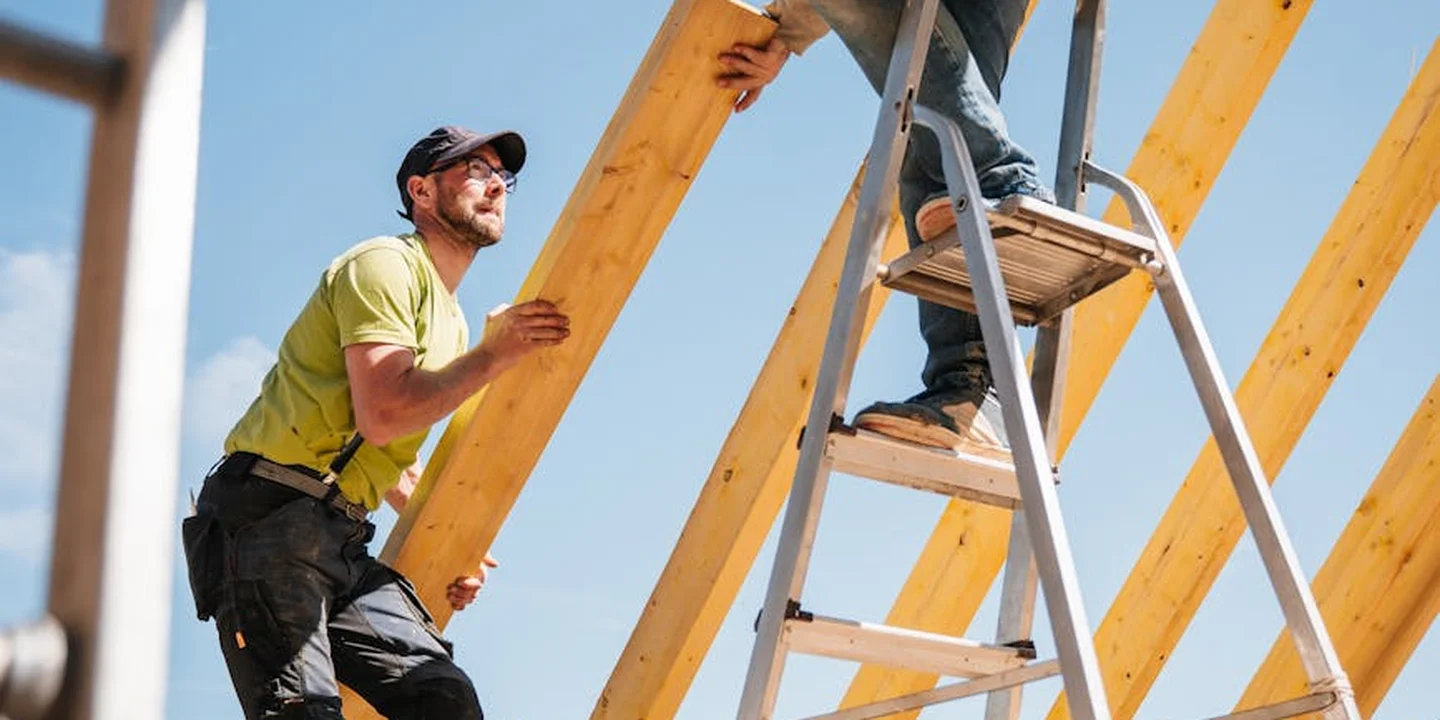
This is the heart of building a roof frame. I’ll show you the exact order we follow on site to get it right.
Laying the Foundation: Top Plates and Ridge Support
Your roof frame starts on the walls. Before any lumber goes up, you must check the top plates of your walls.
Use a long level and a laser level. Check for level along the length and for square by measuring the diagonals. If the walls are not square and level, your entire roof will be crooked and unstable. I’ve spent days fixing this mistake on other crews’ jobs.
Once the walls are true, set your temporary braces. These are simple 2x4s nailed to the interior walls to hold the ridge board in position. It’s a temporary scaffold that keeps the ridge perfectly straight and supported until all the rafters are locked in.
How to Build a Porch Roof Frame (A Common Project)
Adding a roof over a deck is a great example of basic framing. The goal is to attach it securely without causing leaks in your house.
First, attach the ledger board. This is the horizontal board that runs along your house. You must bolt the ledger directly into the house’s wall studs or rim joist, not just the siding. Use galvanized lag bolts and apply a bead of sealant behind the board.
Here are the steps to build the frame roof over the deck:
- Set posts in concrete footings at the outer corners.
- Install a solid beam across the tops of these posts.
- Cut rafters to run from the ledger board on the house out to the beam.
The flashing where the new roof meets the house is critical. I always install step flashing, which is woven under the existing siding and over the new roof underlayment. This creates an interlocking shield that directs water down and away from the wall.
Cutting and Setting the Rafters
Rafters are the angled bones of your roof. Each one needs a birdsmouth cut to sit flat on the top plate and a tail cut to form the overhang.
Lay out your first rafter with a framing square. Mark the plumb cut at the top for the ridge and the birdsmouth notch where it meets the wall.
Now, use the gang-cutting technique. Clamp five or six rafter boards together and use your first rafter as a template to trace the cuts on all of them at once. Saw them all together. This ensures every rafter is identical, which makes assembly faster and the roof line straighter.
To set them, place each rafter against the ridge board and nail it securely. At the bottom, nail through the birdsmouth into the top plate. For safety, I add metal hurricane ties at every connection. I’ve seen too many rafters lift in high winds because they were only toenailed.
Step 4: Sheathing, Underlayment, and the “Leak Point” Analysis
With the frame built, you add the layers that seal it. Sheathing is the solid deck everything else attaches to, like the roof’s skin.
Installing Roof Sheathing: Nailing Patterns and Gaps
Sheathing panels, typically 4×8 feet, are nailed directly to the rafters. The nailing pattern is not a suggestion.
Nails should be spaced 6 inches apart along the panel edges and 12 inches apart in the middle of the panel. Use 8d ring-shank nails for the best hold.
Always leave a small gap, about 1/8 inch, between the long edges of the panels. This gap is essential for the wood to expand and contract with humidity and temperature without buckling.
You’ll choose between OSB and plywood. Plywood is more moisture resistant. OSB is common and cost effective. On a project where rain was forecast before we could get the roof covered, I insisted on plywood sheathing to avoid the swelling I’ve seen with wet OSB.
Underlayment and Protecting the Critical Junctions
Underlayment is the water resistant barrier nailed over the sheathing. Traditional #15 or #30 felt paper works, but synthetic underlayment is lighter, stronger, and less likely to tear in the wind.
Before you roll it out, think like water. Do a “leak point” analysis. Where will water pool or be driven by wind? The main spots are roof valleys, where two slopes meet, chimneys, skylights, and any wall the roof butts against.
For these critical junctions, you need ice and water shield. This is a self adhesive membrane that forms a watertight seal around nails and in vulnerable areas. Install it in the eaves (the first three feet up from the edge), in entire valleys, and around all penetrations like pipes and vents.
This system integrates with drip edge metal at the eaves and rakes, and step flashing at side walls. Drip edge directs water away from the fascia, and step flashing protects the walls. They are not afterthoughts, they are key parts of the waterproofing layer.
Step 5: Safety, Mistakes, and Final Code Checks
This step is not a suggestion. It is the foundation of a job that lasts. I have seen too many good framers get hurt and too many good roofs fail early because this part was rushed. Treat it with respect, especially when it comes to roof installation methods.
The Absolute Non-Negotiables: Safety Gear and Setup
Working on a roof skeleton is dangerous. You are high up, handling heavy lumber, and swinging hammers. Your first tool is not a saw. It is your safety plan.
Every person on that roof deck needs a proper fall-arrest system. This means a full-body harness, connected by a shock-absorbing lanyard to a certified roof anchor. Do not tie off to a plumbing vent pipe. Anchor points must be engineered for the force of a fall.
For steep work, roof jacks and planks are a game-changer. They give you a stable platform to work from and to stack materials. A sturdy extension ladder, set at the right angle (1 foot out for every 4 feet up), is your safe gateway. Check the ground at the base for soft spots.
The hidden risks are what catch crews off guard. High winds can turn a sheet of plywood into a sail. Step on a spot with rotten sheathing, and you go right through. Always know where the power lines are before you lift long rafters. Simple fatigue leads to sloppy cuts and poor judgment. Schedule breaks, drink water, and call it a day before you are exhausted.
Keep the worksite clean. Scrap wood with nails, loose tools, and cord bundles are tripping hazards. A dropped hammer or tape measure can seriously injure someone below. A clean site is a safe, efficient site.
Common Mistakes I’ve Seen Crews Make (And How to Avoid Them)
I have fixed other crews’ work for years. These framing errors happen all the time. Spot them early.
Over-cutting the birdsmouth. This is the notch where the rafter sits on the top plate. If you cut too deep, you severely weaken the rafter. The rule is never cut more than one-third the depth of the rafter. A deep cut creates a hinge point. That rafter can crack under heavy snow, leading to a sagging roof.
Ignoring uplift bracing. Your roof is not just heavy. Wind tries to lift it off the walls. That is why code requires hurricane ties or similar metal connectors at every rafter-to-wall joint. Nails alone will pull out over time. Skipping this bracing risks partial roof collapse in a major storm.
Poor sheathing alignment. Roof sheathing (the plywood or OSB) must have gaps at the edges for expansion. The panels must also be staggered, like brickwork. If you line all the seams up, you create a weak line across the roof. This can cause a visible hinge or dip in the roof plane once the shingles are on.
Skipping the drip edge. This metal flashing goes on before the underlayment along the eaves. I have seen crews “save time” by leaving it off. Without drip edge, water can curl back up under the shingles and rot the roof deck and fascia board. It is a small detail with a huge job.
Under-nailing. Sheathing and framing connectors have specific nailing patterns and nail types in the code. Using too few nails, or the wrong kind (like smooth-shank nails where ring-shanks are required), compromises the entire structure’s strength. The roof will feel spongy and won’t hold up to wind or seismic loads. Nail length varies with roofing material and application, with different materials needing different lengths to grip the substrate. Matching the length to asphalt shingles, metal panels, or tile helps ensure wind resistance and long-term performance.
The Final Walk-Through: Ensuring Code Compliance
Before you ever call for an inspection, do your own final walk. Bring your hammer, your nail gauge, and the building code printout.
Go rafter by rafter. Check that every connector is installed with the correct nails. Verify the nailing pattern on the sheathing is tight and consistent. Look for proper gaps at panel edges. Inspect all flashing details, especially at the rake (sides) and eave edges. This final check is where you turn a collection of lumber into a certified structure.
The building inspector is your ally. They will check these same things. They are looking for your safety and the home’s longevity. Passing inspection is not just a bureaucratic step. It is a third-party verification that your roof is built to withstand your local climate’s worst weather. It protects the homeowner’s investment, which is why a professional roof inspection is often preferable.
There is another critical reason for proper framing. Most major shingle manufacturers will void their warranty if the roof deck is not built to code. If those shingles fail in 10 years, the inspector’s sign-off is your proof that the foundation was sound. It shifts responsibility to the product, not the craftsmanship.
Common Questions
How can I tell if my roof frame was built correctly before the sheathing goes on?
Look for straight lines and solid connections. Every rafter should have a proper birdsmouth cut (not over-cut) and be securely fastened to both the top plate and the ridge board with approved metal hurricane ties.
Is ice and water shield necessary everywhere, or just in certain spots?
It’s critical in specific leak-prone zones, not the whole roof. Always install it in the eaves (first 3 feet), entire valleys, and around all penetrations like chimneys and vents, as a minimum. Your local code will specify exact requirements.
What’s the one thing I should check annually to prevent major framing issues?
Get in your attic with a strong flashlight. Look for any signs of sagging rafters, new water stains, or dark streaks indicating moisture. Catching a small leak or a cracked rafter early saves you from a catastrophic repair later.
Building a Foundation for a Lifetime of Shelter
Nail the framing stage with careful planning and skilled execution, and you’ve built a roof that protects your home for decades. I’ve seen this simple truth hold up on every crew I’ve led, where that solid start meant fewer callbacks and happier homeowners.
Your roof’s longevity now depends on your commitment to safe inspections and ongoing education about its care. I encourage every property manager to learn the basics for all roof types, making you a confident partner in your building’s defense. Knowing the key residential roof life expectancy factors—materials, climate, and maintenance—lets you plan proactive care. This awareness makes you a more effective partner in protecting your building.
Ray Huffington
Ray is an experienced roofer. He has worked as a general contractor in the roofing industry for over 15 years now. He has installed and repaired all kinds of roofs, from small houses to large mansion, and from basic shingles to cement and metal roofs and even solar roof panels. He has seen homeowners struggle with roofing questions and always has experience based proven advice to help those in need. If you need roof pros, Ray's your guide.