
How Do I Fix a Damaged Roof Rafter? A Homeowner’s Guide
Have you noticed a sag in your roofline, heard new creaks from above during a storm, or seen cracked plaster on your ceiling? That feeling of worry is real. I’ve been on hundreds of jobs where that subtle sign was the first clue to a rafter problem.
You are likely wondering if this is a major structural emergency or something you can handle. The good news is, many rafter repairs are straightforward if you catch them early and follow a careful process. This guide will walk you through it.
We will cover: How to safely inspect your attic to assess the damage. The simple materials you’ll need for a strong, code-compliant repair. A step-by-step method to sister a new rafter alongside the old, damaged one.
How to Spot a Damaged Rafter and Assess the Risk
Your roof is like a skeleton. The rafters are the ribs holding everything up. When one is weak, the whole structure feels it. From overhangs to eaves and trusses, every structural component matters. Understanding roof parts like overhangs and eaves helps keep the whole system strong.
You don’t need X-ray vision to spot trouble. Look for these common signs:
- Sagging Roof Lines: Look at your roofline from the street. A dip or curve where it should be straight is a major clue.
- Visible Cracks or Splits: In the attic, check for cracks running with the wood grain or, worse, across it.
- Water Stains & Musty Smells: Dark stains on the wood or a persistent earthy odor point to a long-term leak.
- Bouncy Floors Below: If a floor feels springy directly under the roof, a rafter above might be deflecting.
A simple screwdriver and a string can tell you more than you think.
Grab a flathead screwdriver. Gently poke the suspect rafter, especially near the bottom where water collects. If it sinks in easily or the wood crumbles, you’ve found rot. For sag, stretch a string line along the bottom edge of several rafters. Any gap between the string and the wood shows how much it’s dropped.
What Your Rafter’s Condition is Really Telling You
Not all damage is equal. A small surface crack from the wood drying is like a wrinkle. It’s cosmetic. A deep split that you can fit a dime into is a structural problem. It means the wood fibers can no longer share the load properly.
Rot is the real enemy. You have two main types:
- Dry Rot (Fungal): This is sneaky. A fungus digests the wood, making it dry, brittle, and crumbly. It often spreads behind seemingly good surfaces.
- Wet Rot: This happens with constant moisture. The wood stays damp, turns dark, and feels spongy. It weakens the wood by breaking down its cellular structure.
Think of dry rot as a termite and wet rot as a sponge; both destroy the wood, but in very different ways.
Solid, dry rafters can easily last 50 years or more. Moisture is what cuts that life short. You need to know when to sister a rafter and when to call for a full replacement.
Here is my rule from the field: if the rot or damage affects more than one-third of the rafter’s depth, it’s too compromised. If multiple rafters right next to each other are bad, the roof section is unstable. Imagine your roof is held up by seven rafters. If three in a row are rotten, that’s not a repair job. That’s a replacement job. That’s a red flag. Beyond that, knowing roof rafter span guidelines helps determine whether the remaining rafters can carry the load. Material selection then matters for long-term resilience and easier replacements.
Always check the neighbors of a bad rafter. Damage rarely happens in isolation. Probe the rafters on either side. Push up on the roof sheathing (the plywood under the shingles) to feel for soft spots. Look at the ridge board at the peak where the rafters meet. If that’s stained or soft, the problem is widespread.
Safety First: The Non-Negotiables for Attic Work
Let me be direct. This work is often in “Pro-Only” territory. The risks are real: a fall through the ceiling, a misstep onto a live wire, or disturbing a structure that’s already weak.
If you have any doubt about the structure’s stability or your comfort level, stop and call a professional. Your safety is not a DIY project.
If you proceed, treat this like a job site. Your Hazard & Safety Assessment starts with gear:
- Harness & Anchor: A fall-arrest harness, properly anchored to a sturdy roof truss or structural member, is your most important tool.
- Knee Pads & Gloves: You’ll be crawling on rough wood. Protect your joints and hands.
- Respirator (N95 or better): Attic insulation and mold spores are not for your lungs.
- Headlamp: Two free hands and clear light are non-negotiable.
The attic itself is the hazard. Steep, makeshift access. Unshielded electrical wires and junction boxes. No real floor, just joists and insulation. Working alone is the biggest risk of all.
Never, ever work in the attic alone. Use a buddy system. Have someone on the ground who checks on you and knows how to get help.
Before you go up, shut off the power to any circuits running through the attic at the main breaker panel. It’s the only way to be sure. Prop open the attic access door and use a fan to pull in fresh air. It gets dangerously hot and stuffy fast.
Building codes exist for safety. For structural rafter work, your local building department will likely require a permit and an inspection. This isn’t bureaucracy. It’s a system designed to make sure the repair is done right and your home stays safe. We’ll get into code specifics later.
The Attic Workzone Setup
You cannot work safely while balancing on the 2×4 ceiling joists. Your first task is to create a stable platform.
Lay down ¾-inch plywood panels across the joists to create walkways and a work area. Secure them with a few screws so they don’t shift. This gives you safe footing and a place to set tools.
Your weight is concentrated on your feet. Stepping between joists directly onto the ceiling drywall or insulation will put your foot through the ceiling. Every step must be on a joist or your plywood platform. Move deliberately and keep your center of gravity low.
Gathering Your Tools and Setting Up Temporary Support
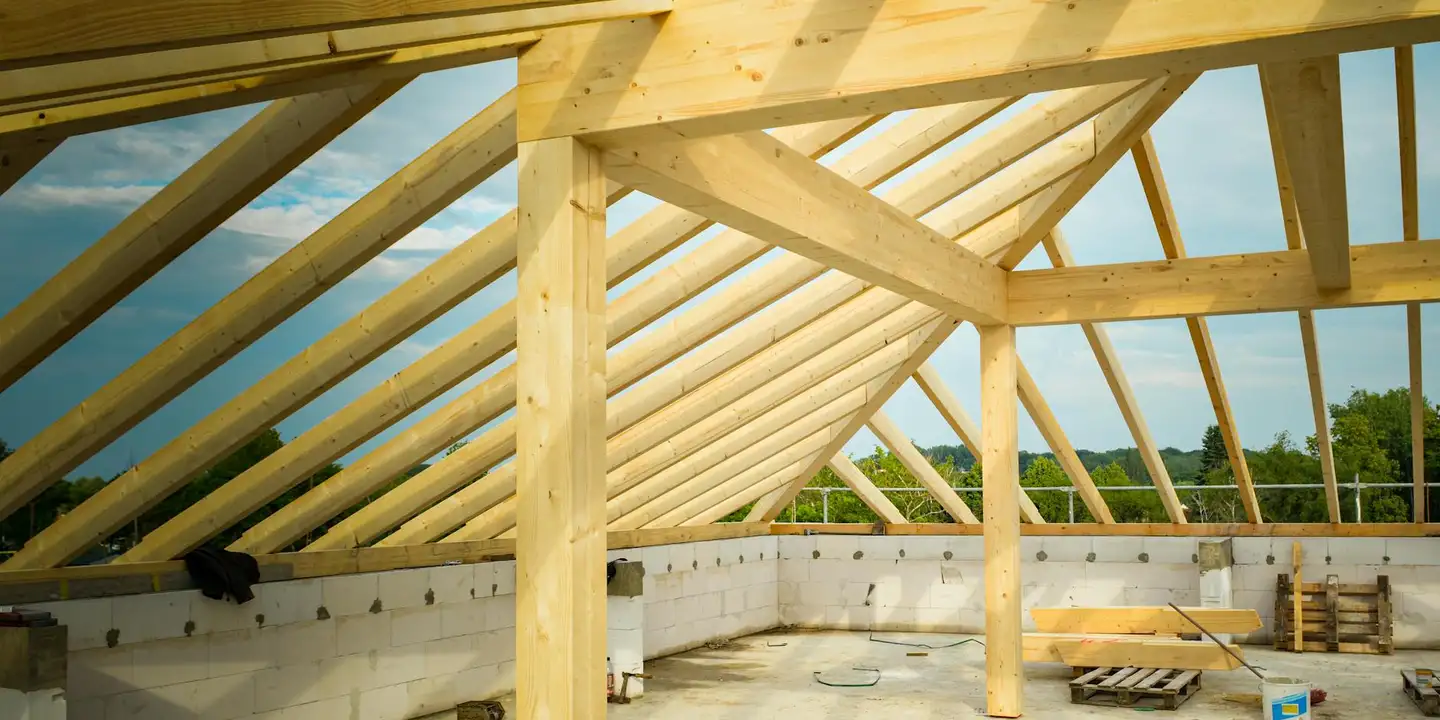
Before you touch a damaged rafter, you need two things: the right gear and a safe way to hold up the roof. This is how you add support to roof rafters during the fix. I learned this the hard way on an old garage job years ago. We started without bracing and heard a scary creak. We stopped right there and checked our approach against emergency roof repair guidelines.
First, gather your tools and materials. You do not need fancy equipment.
- Tools: A circular saw, a powerful drill, a 4-foot level, and a socket set.
- Materials: Pressure-treated lumber for sister rafters, 1/2-inch lag bolts with washers, two-part epoxy filler for wood, and metal strapping or hurricane ties.
You must install temporary support walls before any repair to prevent sagging or a total collapse. People often ask if you can replace rafters without removing the roof. The answer is yes, but only if you set up proper temporary bracing first. This temporary structure, called a “strongback,” takes the weight off the damaged rafter so you can work safely.
The Temporary Support Lifeline
Building this support is straightforward but must be done right. Your goal is to create a temporary wall directly under the damaged area.
- Find the load-bearing wall below the bad rafter. This is usually an exterior wall or a main interior wall.
- Use sturdy 2×4 or 4×4 posts. Place them vertically from the floor to the ceiling joist above, right next to the damaged rafter’s path.
- Check each post with a level. It must be perfectly plumb. A crooked post is a weak post.
- Secure the top and bottom. Use heavy-duty screws or nails to attach the posts to a solid floor plate and to the ceiling joist above. This temporary wall now shoulders the roof load.
Do not skip this step. I have seen roofs dip permanently because someone thought they could work fast without support. Learning about proper roof construction methods is crucial to avoid such issues.
Hands-On Repair: Sistering, Patching, and Reinforcing Rafters
With the roof supported, you can focus on the repair. Your method depends on the damage. Let’s break it down.
How to sister a new rafter to a damaged one. This is the most reliable fix for a weakened rafter. Sistering means attaching a new board alongside the old one.
- Measure the length of the damaged section. Cut your new pressure-treated lumber to match. It should be the same depth and thickness as the original, or larger.
- Position the new “sister” rafter flush against the old one. Have a helper hold it in place.
- Use a long level to ensure the new board is straight and aligned with the roof plane. This is how you ensure the repaired section is properly aligned.
- Pre-drill holes through both boards to prevent the wood from splitting. This is a best practice for securing the new rafter material.
- Secure the sister rafter with 1/2-inch lag bolts and washers. Drive them in a staggered pattern every 16 inches along the length.
This directly covers how to attach roof rafters to existing ones for strength.
How to repair a cracked or split rafter. For a clean, hairline crack that hasn’t compromised the rafter’s shape, you can sometimes use wood glue and clamps.
- Force waterproof wood glue into the crack.
- Clamp it tightly until the glue dries completely.
If the crack is wide or the rafter is bending, sistering is the only safe option. A glued crack on a bowed rafter will just re-open.
How to treat and prevent wood rot in rafters. For minor, localized rot (soft spots smaller than a dollar bill), you can cut out the bad wood and fill it.
- Scrape out all the soft, punky wood with a chisel.
- Mix a two-part epoxy wood filler as directed.
- Pound the filler into the cavity and let it cure hard.
Remember, this is a patch. It is not a permanent fix for large areas of rot.
How to reinforce rafters for added strength and security. Sometimes a rafter is sound but you want extra security, especially in storm-prone areas. You have two main choices.
- Add metal hurricane ties at the connection points where the rafter meets the wall plate or ridge board. These are nailed or screwed on.
- Scab on shorter boards. This is like a partial sister. Cut a 2-3 foot long piece of lumber and lag bolt it over a weak spot or a suspect knot.
This relates to how to add rafters to existing roof for support when full sistering isn’t needed.
Sistering a Rafter: Your Main Fix
Let’s simplify the sistering process into three core actions. This is what my crew does on every job.
- Position the new lumber perfectly flush against the old rafter. Any gap means lost strength.
- Pre-drill all holes. This prevents splitting and makes driving the bolts easier.
- Use at least 1/2″ lag bolts with washers every 16 inches. Follow a zig-zag pattern up the board for the best hold.
The new rafter should be the same size or larger than the original. This ties directly into how do you make roof rafters for repair: you don’t make them from scratch, you use standard lumber to match or exceed the old.
When a Quick Patch is Actually a Waste of Money
Let’s talk about the repair vs. replace cost-benefit. Homeowners often want the cheapest fix. I get it.
Filling a large rotten section with epoxy is a band-aid. It will likely fail in 2-3 years as moisture works around it. You will be back in the attic doing the job again.
Compare the real costs. Doing a DIY sistering repair yourself might cost $150 to $300 in lumber, bolts, and supplies. Hiring a professional to fully replace a compromised rafter could run $1,000 to $2,500 or more, depending on access and complexity.
Weigh the extent of the damage against long-term security. Spending $300 now on a proper sister is smarter than spending $300 on epoxy now and $2,000 on a replacement later.
The Big Picture: When to Replace, Code Compliance, and Long-Term Care
You have the steps to fix a damaged rafter. But you need to know when a repair is not enough and a full replacement is the only safe choice. You also must consider the rules that keep your house standing.
Completely replacing a rafter is necessary when the wood’s strength is gone at a critical point. Here are the clear signs that mean it’s time for a new piece of lumber.
- Severe bowing or sagging more than an inch, especially if it doesn’t spring back when you push on it.
- Insect damage that has created a network of tunnels, turning solid wood into a crumbly shell.
- Fire charring that has penetrated deeply, as the heat weakens the wood fibers.
- Rot or water damage right where the rafter meets the wall plate or ridge board. This connection is everything.
Building codes are not suggestions. They are the collected wisdom of engineers and builders, written into law to prevent collapse. These codes dictate the maximum span a rafter can cover, the grade and size of lumber you must use, and exactly how to fasten it with the right number and type of nails. A roofing nail quantity guide translates these guidelines into practical counts for different roof shapes, materials, and fastener patterns. It makes it easier to apply the code without over- or under-nailing. Using a smaller piece of wood or fewer nails might look fine, but it compromises the entire system’s safety during the next heavy snow or wind storm.
Checking with your local building department before you start is not optional for major work. They will tell you if you need a permit, which ensures an inspector reviews your repair. This isn’t red tape. It’s a free quality check from an expert.
Preventing rafter damage is far easier than fixing it. Your strategy is simple and hinges on keeping the attic dry and airy.
- Fix any roof leak immediately. Water is the enemy of wood.
- Maintain attic ventilation. Proper airflow prevents condensation and moisture buildup that leads to rot.
- Do an annual visual check. Once a year, use a bright flashlight to scan your rafters for any new stains, sagging, or signs of pests.
Remember, how you attach roof rafters securely is governed by local building code. A permit may be required for this work, and that permit is your validation that the repair was done right.
Making the Call: DIY or Professional Help?
After walking through the repair process and the code requirements, you have to make a final decision. The hazards are real working in a tight attic space with sharp tools overhead.
If your situation involves any of the following, the clear and safe verdict is to call a licensed contractor. They have the crew, insurance, and experience to handle complex jobs safely.
- Damage to multiple adjacent rafters, which indicates a wider structural issue.
- A steep roof pitch that makes attic work dangerous.
- Unclear or complex local building code requirements for connections and materials.
For a single, accessible rafter with localized damage, a confident and careful homeowner can do this. For anything beyond that, get a pro.
The good news is that with proper roof and attic maintenance, having to repair a roof rafter becomes a very rare event. Most houses go decades without needing this kind of work. Your vigilance with leaks and ventilation is the best long term repair strategy you have.
Common Questions
How long can my roof safely stay on temporary supports?
Temporary braces are for the repair period only-never leave them in place for more than a few days. They are not a permanent structural solution and can settle or shift, creating new points of stress on your roof.
Is pressure-treated lumber always the right choice for a sister rafter?
Yes, for any repair where moisture was the original culprit. For dry attics with simple cracks, standard kiln-dried lumber of the same grade is acceptable; the treated wood provides insurance against future, unseen moisture issues.
How do I handle building codes without getting overwhelmed?
Call your local building department before you start. Ask them two things: if this repair requires a permit, and what fastener schedule (nail/bolt type, size, and spacing) they require for a rafter sister-this gives you a clear, approved target.
Securing Your Roof’s Foundation for the Years Ahead
From my crew’s experience, the best roof care starts with a careful look inside your attic to spot rafter damage before it worsens. When you repair, always sister new lumber to the old or replace it entirely with pressure-treated wood, using galvanized fasteners for a fix that lasts.
Your home’s safety relies on your commitment to regular checks and using proven methods for any repair. Keep building your know-how with trusted guides on roof care and maintenance for every type of roof, so you’re always ready to act.
Ray Huffington
Ray is an experienced roofer. He has worked as a general contractor in the roofing industry for over 15 years now. He has installed and repaired all kinds of roofs, from small houses to large mansion, and from basic shingles to cement and metal roofs and even solar roof panels. He has seen homeowners struggle with roofing questions and always has experience based proven advice to help those in need. If you need roof pros, Ray's your guide.