
How Much Does a Commercial Roof Inspection Cost? A Veteran Roofer’s Breakdown
What’s the first thing that comes to mind when you think about a commercial roof inspection? If it’s a dizzying bill, you’re not the only one. I’ve sat across the desk from dozens of business owners who put off this critical checkup because they fear the unknown cost. Let’s clear that up right now.
I’ll walk you through the typical price ranges I see on real job invoices. You’ll learn the specific factors that make your price unique. I’ll also share how a thorough inspection pays for itself by preventing disaster.
Key Takeaways: Cutting Through the Cost Confusion
Here is the reality of commercial roof inspection pricing.
- The average cost for a professional, on-roof inspection is between $500 and $1,500 for a standard-sized building.
- Your final price is driven by three main things: the size of your roof, how easy it is to access, and the type of detailed reporting you need.
- This is not an expense. It is a strategic investment. A $750 inspection that finds a small leak can prevent a $15,000 interior repair.
You might ask, are roof inspections free? For a residential shingle roof, maybe. For your commercial property, a truly free inspection is rare. When a company offers one, look closely. They are often a sales tactic to secure a repair contract. The inspection report might lack detail unless you hire them for the work. You are paying for unbiased expertise.
Think of the inspection fee as buying a detailed map of your roof’s health, not just a quick glance at the terrain. That map helps you plan and budget with confidence.
What Exactly Is a Commercial Roof Inspection?
It is not a guy in a truck looking up from the parking lot with binoculars. A real commercial roof inspection is a hands-on, systematic assessment of your entire roofing system.
Think of it like a doctor’s physical for your building. You get a check of the vital signs, not just a handshake. A thorough pro will examine every layer and component.
A proper inspection involves walking the entire roof surface to find problems you cannot see from the ground. Here is what we look at, piece by piece.
- The Membrane or Deck: This is the roof’s skin. We check for cracks, blisters, punctures, and general wear. Is it brittle? Is it pulling apart at the seams?
- Flashings: These are the metal or rubber seals around walls, vents, and equipment. They are the most common leak source. We check for rust, open seams, and poor seals.
- Drains and Scuppers: We make sure water can actually leave the roof. Are the drains clogged? Is the slope directing water to them properly?
- Penetrations: Every pipe, conduit, and HVAC unit is a potential leak. We inspect the seals and boots around each one.
- Interior Signs: A good inspector will also check inside, in the ceiling space below the roof. We look for stains, mold, or wet insulation that tell the story of a slow, hidden leak.
The difference between a ground-level visual and an on-roof inspection is huge. From the ground, a roof can look perfectly fine. Up close, you find the cracked caulk, the loose fastener, the tiny puncture from last month’s maintenance visit. You only get the full picture by being on the roof. Understanding this scope of work is the first step to knowing why prices vary.
The Real Cost: Average Prices for Commercial Roof Inspections
So, what is the average cost of a commercial roof inspection? Nationally, you can expect to pay between $0.10 to $0.25 per square foot. For a standard 20,000 sq. ft. roof, that’s a range of $2,000 to $5,000.
Most professional outfits I work with price inspections one of two ways. They either use that per-square-foot calculation or they charge a flat project fee. The flat fee is common for smaller or mid-size buildings because it’s simpler for everyone. I prefer the flat fee model when I can use it, as it gives the property manager a fixed cost upfront with no surprises.
Standard Inspection Cost Range
To make this more concrete, here are typical price brackets based on roof size and scope.
- Small Commercial (Under 10,000 sq. ft.): $500 – $1,500. This covers buildings like large retail stores, small warehouses, or medical offices. Think of this cost as similar to a high-end office printer or a month’s utility bill for the space.
- Medium Commercial (10,000 – 50,000 sq. ft.): $1,500 – $5,000. This includes most suburban office parks, manufacturing facilities, and shopping centers. The price here is often comparable to a needed software upgrade or a minor HVAC repair for the building.
- Large Commercial/Industrial (50,000+ sq. ft.): $5,000 – $10,000+. For large distribution centers, big-box retailers, or campus-style buildings. While this seems like a significant line item, it’s a fraction of the cost of an unplanned major roof repair or replacement project.
The key is to view this not as an expense, but as an investment in your property’s longevity and your own budgetary peace of mind.
What’s Included in That Base Price?
When you hire a reputable inspector, your fee buys a specific set of actions and deliverables. It’s not just a guy walking around up there for an hour.
The standard service includes the inspector’s time on-site, which involves a systematic walk of the entire roof surface and all penetrations (pipes, vents, HVAC units). They’ll use basic hand tools, moisture meters, and likely a drone for documentation and hard-to-see areas. The core deliverable is a comprehensive written report.
Is a written report included in the inspection cost? Absolutely, and it should be. A verbal summary over the phone is worthless for planning and accountability. A proper report is non-negotiable; it’s your legal document and repair roadmap, and it’s the central product you’re paying for. A good report will have photos, diagrams of trouble areas, a condition assessment of all roofing components, and a prioritized list of recommended actions with repair timelines.
How Long Does a Roof Inspection Take?
How long do roof inspections take? For a basic visual inspection of a simple, rectangular 20,000 sq. ft. warehouse roof, plan on 2 to 4 hours on-site. Complexity is the real time-eater.
A roof cluttered with dozens of HVAC units, pipes, and solar panels takes longer to navigate and assess. Different roof sections with various materials (like a built-up roof over the office and single-ply membrane over the warehouse) require more inspection time. The need for core cuts or infrared moisture scanning adds significant hours.
This time directly ties to labor cost. A two-person crew for half a day is a standard minimum. More complex roofs demand more skilled labor hours, which is reflected in a higher flat fee or a thorough per-square-foot rate. A simple roof is like checking the oil in your truck; a complex one is like a full engine diagnostic. Both are necessary, but one requires more expertise and time.
What Drives the Price? Factors That Affect Inspection Costs
The final number on your quote isn’t random. It’s the inspector’s calculation of the time, expertise, and risk involved in evaluating your specific roof. Knowing what factors influence the cost of a commercial roof inspection is the key to understanding your quote and ensuring you get good value. Think of it like hiring a mechanic for a fleet vehicle versus a sedan; the job’s scale and complexity set the price.
Factor 1: Roof Size and Square Footage
Does the size of the roof affect the inspection price? Absolutely yes. Most reputable inspectors use a square footage model as their starting point. A bigger roof means more area to walk, more seams to check, and more drains to clear. It simply takes more time.
For a standard, low-slope warehouse with easy access, you might see a base rate per square foot. A straightforward 5,000 sq ft TPO roof could be on the lower end of the spectrum. A 50,000 sq ft facility of the same type will cost more, but the price per square foot often decreases slightly for very large, simple roofs because the setup time is spread out. The crew’s time on-site is the biggest driver here.
Factor 2: Roof Material and System Type
How does the roof’s material impact inspection costs? Different materials demand different eyes and different tools. An inspector skilled with EPDM rubber might miss a subtle issue on a standing seam metal roof, and vice versa. You pay for specialized knowledge.
- Single-Ply (EPDM, TPO, PVC): The inspection focuses on seams, adhesives, and perimeter details. We use moisture meters to scan for trapped water you can’t see.
- Metal Roofing: We’re checking fastener integrity, sealant at laps and penetrations, and panel condition. Rust and oil-canning are key concerns.
- Built-Up Roof (BUR) or Modified Bitumen: This is a more hands-on inspection for alligatoring, blistering, and ensuring the flood coat is intact.
An inspector familiar with your system works faster and spots problems a generalist might overlook.
Factor 3: Roof Complexity, Pitch, and Access
Does the complexity or slope of the roof change the price? It always does. A simple, single-level, low-slope roof is the easiest and fastest to inspect. Complexity adds time, equipment, and safety planning.
- Steep Slopes: A steeply pitched roof requires special fall protection gear, more cautious movement, and often a second person for safety. This adds significant time.
- Multi-level Designs: A roof with multiple heights, parapets, and sections means climbing up and down, moving ladders, and inspecting each zone separately.
- Numerous Penetrations: Every pipe, vent, HVAC unit, and skylight is a potential leak point. A roof with dozens of penetrations takes longer to inspect properly than a clean surface.
- Difficult Access: If we can’t use a ladder and need a lift or a crane to reach the roof, you’re paying for that equipment rental and operator time.
Factor 4: The Inspector’s Expertise and Overhead
How do roof inspectors get paid? You aren’t just paying for an hour of their time. You’re paying for everything that makes them a qualified, reliable, and safe professional. A legitimate inspector carries heavy insurance, invests in ongoing training and certifications, and uses specialized diagnostic tools that cost thousands of dollars. Their fee covers their business license, vehicle costs, and the skilled labor of their crew.
This is why choosing the cheapest option can backfire. A qualified pro might charge more per hour, but their thorough report saves you money on repairs down the line. This expertise directly ties into how you choose the right person for the job.
Factor 5: Urgency and Scheduling
Are there additional costs for emergency or after-hours inspections? Almost always. A planned, routine inspection during normal business hours is standard pricing. If you need someone out immediately after a storm on a Saturday night, that’s different.
Emergency or after-hours inspections come with premium rates, often 1.5 to 2 times the standard fee, to cover overtime pay and the urgent dispatch. Storm-response visits are especially common, where inspectors are in high demand. Planning your inspection well in advance avoids these extra costs.
When a “Free Inspection” Actually Costs You
This brings us to a critical question: are roof inspections free? Some companies offer them, but I urge caution. In my experience, a “free inspection” is almost always a sales tool for a roofing contractor. Their goal is to find enough “urgent” problems to sell you a roof you may not need yet.
These free inspections can lead to high-pressure sales tactics and inflated repair estimates, which costs you far more than a fair inspection fee would have. A professional, third-party inspector who charges a transparent fee has no vested interest in selling you a new roof. They work for you, not for a sales quota. A clear, upfront cost is a hallmark of true professionalism and objective advice.
From Inspection to Action: The Repair vs. Replace Cost-Benefit Verdict
An inspection report lands on your desk. It lists a few issues. Now you face the big question: do you fix what’s broken, or is it time for a whole new roof? This decision comes down to a simple cost-benefit analysis. I’ve guided countless building owners through this.
The single best way to save money is to catch problems early with regular inspections. Think of it like changing the oil in a truck. Skip it, and a small fix becomes a blown engine. On a roof, a $1,000 repair for a small leak today can prevent a $100,000 replacement next year from water rotting the deck. I once inspected a warehouse where we found and patched a failing seam on a 5-year-old roof for under $800. That roof is still protecting the building today, 10 years later.
When a Patch Fix Makes Sense (The “Band-Aid” Zone)
A repair is your best financial move when the damage is limited and the roof system itself is sound. I call this the “Band-Aid” zone. You’re addressing a specific wound on a healthy body. An emergency repair can sometimes even be a proactive move.
Repair is viable when you have small, isolated damage on a roof with plenty of life left. Look for things like a single puncture from debris, a small blister on a modified bitumen roof, or a loose section of metal flashing. The key is that the rest of the membrane, seams, and insulation are in good shape. If your roof is only halfway through its expected lifespan, a targeted fix makes perfect sense—just be sure to avoid common repair myths.
Here are typical cost tiers for common commercial roof repairs. These are ballpark figures from jobs I’ve priced, and they vary by region and roof access.
- Minor Sealant or Caulking Work: Fixing small cracks around penetrations or edge details. Usually $200 to $500.
- Patching a Tear or Puncture: On a single-ply (EPDM, TPO) or built-up roof. Often $300 to $800 per patch.
- Resealing or Replacing a Section of Flashing: Around a pipe, vent, or wall. Can range from $500 to $1,500.
- Addressing a Small Ponding Area: Adding drains or tapered insulation to improve drainage. This is more involved, typically $1,000 to $3,000.
When Replacement is the Only Smart Choice (The “Red Flag” Zone)
Sometimes, pouring money into repairs is like putting duct tape on a cracked foundation. It might hold for a minute, but it’s a waste. You’re just delaying the inevitable bigger bill.
Replacement is the only smart choice when you have widespread deterioration, recurrent leaks, or a failed substrate. If leaks keep popping up in new spots after every repair, the membrane is failing. If a moisture survey shows over 25% of the insulation is wet, the deck is at risk. If the roof surface is alligatoring or cracking across large areas, patching won’t solve the core problem.
Contrast those repair costs with a full replacement. Commercial roof replacement is priced per square foot (100 square feet). A basic re-cover might start around $5-$8 per square foot. A full tear-off with new decking and high-quality membrane can easily hit $10-$15 per square foot or more. For a 20,000 square foot roof, that’s a $100,000 to $300,000 project.
Here is your clear verdict: if you see isolated damage on a roof under 15 years old, patch it. If you see leaks in multiple locations, wet insulation, or a roof past its life expectancy, start budgeting for a new roof. Throwing good money after bad on endless repairs will cost you more in the long run.
Assessing Your Roof’s Health: Integrity, Lifespan, and Inspection Frequency
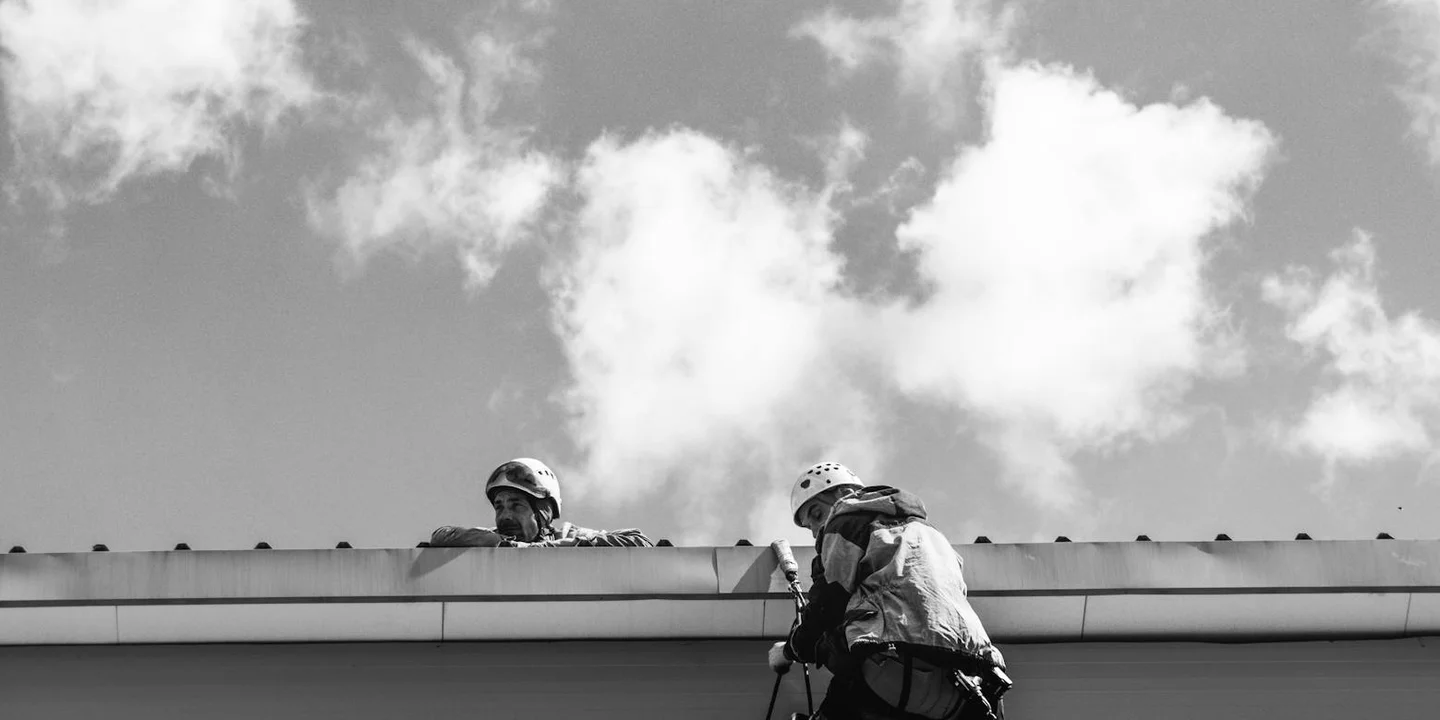
Think of a roof inspection as a thorough medical check-up for your building. It doesn’t just note current problems. It assesses the overall integrity of your entire roof system.
Roof integrity means how well all the components work together to keep water out. An inspector checks the membrane, seams, flashings, drains, and insulation. They look for weaknesses you can’t see from the ground.
This process directly gauges your roof’s remaining lifespan by identifying how much wear and tear it has absorbed. A roof at year 15 of a 20-year life expectancy might still be functional. But if an inspection finds widespread deterioration, its realistic remaining life could be just a year or two. Residential roof life expectancy factors—such as material type, climate, and maintenance history—can shift that timeline. Understanding these factors helps homeowners plan timely replacements and maintenance.
How often should a commercial roof be inspected? I tell every property manager the same rule. Get a professional inspection twice a year, in spring and fall. This catches seasonal damage. Always schedule one after any major storm with hail or high winds.
Do not wait for a leak to call someone. By then, water has already damaged the deck and insulation. The repair bill multiplies.
Typical Lifespans of Commercial Roof Materials
Every roof material has a general service life. Knowing this helps you plan your budget. Here are the realistic ranges I’ve seen on my jobs, which can vary by location:
- EPDM (Rubber Roofing): 20 to 30 years. It’s durable but can become brittle from UV exposure over time.
- TPO/PVC (Single-Ply Membranes): 20 to 25 years. Great for reflectivity, but seam integrity is everything.
- Built-Up Roofing (BUR or “Tar and Gravel”): 15 to 25 years. A classic system, but heavy and can dry out.
- Metal Roofing (Standing Seam): 30 to 45+ years. Long-lasting, but fastener seals and panel clips need monitoring.
- Modified Bitumen (Torch-Down): 15 to 20 years. Reliable, but the torch-applied seams can degrade.
An inspection tells you how much of that lifespan is used up. We look at the material’s current condition, not just its age. I’ve seen 12-year-old TPO roofs ready to fail because of poor installation. I’ve also seen 25-year-old EPDM roofs that, with some patching, have a few good years left. The inspection focuses on performance, not just the calendar.
Red Flags That Shorten Lifespan and Demand Action
Inspectors are trained to spot small issues before they become catastrophes. Here are the critical red flags we find that drastically shorten a roof’s life.
Ponding Water: This is water that sits for more than 48 hours after a rain. It’s the most common killer of flat roofs. In flat-roof construction, ponding is a clear sign of flat roof drainage problems. Properly addressing ponding is key to extending roof life. That weight stresses the deck. Stagnant water also breaks down membranes and invites organic growth. Fixing drainage might cost a few thousand dollars. Ignoring it leads to a full roof replacement costing tens of thousands.
Membrane Blisters or Ridges: These look like bubbles or raised wrinkles. They mean moisture or air is trapped under the membrane. Eventually, they crack open. A few small blisters can be repaired. Widespread blistering signals a failing membrane system that needs recovery or replacement.
Cracked or Deteriorated Flashings: Flashings seal the edges and penetrations (like pipes and vents). Cracked metal or shrunken rubber boot flashings are direct leak paths. Replacing a section of flashing is a targeted, affordable repair. Letting it go allows water to run behind walls and into the building interior.
Open Seams and Splits: On single-ply roofs, the glued or welded seams are the weakest link. Heat and cold cause them to pull apart. A split seam can often be welded for a few hundred dollars. Unrepaired, it lets water flood the insulation layer, ruining its R-value and rotting the deck.
Spotting these red flags early is the whole point of the inspection. It turns a reactive emergency into a manageable, scheduled repair. That control is what saves you real money.
Hiring the Right Pro: How to Choose a Commercial Roof Inspector
Finding the right person for the job matters more than you might think. I have seen building managers pick the cheapest quote and end up with a report that tells them nothing useful. Your goal is to hire a professional who gives you a clear, honest picture of your roof’s health.
What qualifications should you look for in a roof inspector? Start with a focus on safety and code compliance. A reputable inspector follows strict safety protocols for their crew and knows local building codes backwards. Ignoring safety risks lives, and missing code issues can lead to expensive penalties down the road. On a warehouse project last spring, the chosen inspector caught a subtle drainage violation that would have voided the warranty. That kind of knowledge pays for itself.
Non-Negotiable Credentials and Questions to Ask
Do not compromise on these four credentials. They are your basic protection.
- Proper Licensing: The inspector or their company must hold a valid roofing contractor’s license for your area.
- Adequate Insurance: You must see current certificates for general liability and worker’s compensation insurance. This shields you from liability if an accident occurs.
- Manufacturer Certifications: For systems like TPO, PVC, or EPDM, the inspector should be certified by that manufacturer. This means they know the specific installation and failure points.
- Experience with Your Roof Type: Inspecting a built-up tar and gravel roof is a world apart from a metal standing seam roof. Ask for examples of similar projects.
When you call for quotes, have this script of questions ready. It separates the professionals from the amateurs.
- “Can you email me copies of your license and insurance certificates before the inspection?”
- “Are you certified by the manufacturer of my roof system? Which ones?”
- “How many commercial inspections did you perform on [your roof type] in the last six months?”
- “What is your on-site safety plan? Do your crews use harnesses and guardrails?”
- “Will you provide a detailed scope of work in the proposal before we start?”
Understanding the Proposal and Avoiding Pitfalls
A clear proposal is your first sign of a thorough inspector. It should read like a recipe, listing every step they will take. Look for items like a visual perimeter check, interior attic examination, moisture scanning, and core sampling. If the proposal is vague, the inspection will likely be vague too. I once reviewed a competitor’s report that just said “roof is old” with no photos or specific findings. It was worthless.
Be very cautious of two common pitfalls. First, avoid inspectors who give you a vague, paragraph-long report without diagrams, photos, or precise locations for issues. You need a map of your roof’s problems, not poetry. Second, steer clear of any inspector who offers a “free inspection” and then immediately gives you a bid for the repairs. There is a clear conflict of interest when the same person diagnosing the problem is also selling the solution. A trustworthy inspector charges a separate, fair fee for their unbiased assessment. Consider using a roof damage inspection guide as a step-by-step framework to know what to look for. It helps you document findings for easy comparison later.
Think of a good roof inspector like a skilled doctor. They examine, run tests, and give you a straight diagnosis with recommended next steps. Their income comes from the consultation, not from selling you the surgery. You want that objective advice for your roof.
Common Questions
How often should I actually get my commercial roof inspected?
Schedule a professional inspection twice a year, in spring and fall. Always get a check after any major storm with hail or high winds to catch damage early.
What’s the one thing I must verify before hiring an inspector?
Always ask for their license and proof of insurance before they step on your property. A true pro will provide this immediately-it protects you and signals a legitimate operation.
Can a routine inspection really save me significant money?
Absolutely. It transforms unpredictable emergency repairs into scheduled, manageable maintenance. Finding and fixing a $500 problem today prevents a $50,000 replacement tomorrow.
Smart Spending for a Sound Roof
Focus on the value a professional inspection provides, not just the initial cost. From my experience, that upfront investment routinely uncovers minor issues you can fix now, preventing costly emergency repairs later.
Your roof’s long-term health depends on your commitment to scheduled, safety-first inspections. I recommend you keep building your knowledge on roof care and materials to make confident, lasting decisions for your property.
Ray Huffington
Ray is an experienced roofer. He has worked as a general contractor in the roofing industry for over 15 years now. He has installed and repaired all kinds of roofs, from small houses to large mansion, and from basic shingles to cement and metal roofs and even solar roof panels. He has seen homeowners struggle with roofing questions and always has experience based proven advice to help those in need. If you need roof pros, Ray's your guide.