
How Long Does a House Roof Last? A Roofer’s Guide to Average Lifespan and Key Factors
How many years should you really get from your roof? I’ve answered this for hundreds of homeowners over my career, and that uncertainty about a major expense is what keeps folks up at night. The average lifespan isn’t one number-it’s a range that depends entirely on what your roof is made of and how it was built.
First, I’ll walk you through the real-world lifespan you can expect from common materials like asphalt shingles and metal. Then, I’ll show you how the quality of installation, based on mistakes I’ve corrected, is a huge factor. Finally, I’ll share the maintenance practices that my crew uses to add years to any roof.
The Straight Answer: How Long Roof Materials Actually Last
When homeowners ask me “how long can a roof last on a house,” I give them the honest numbers from my time in the trade. These aren’t warranties, they’re real-world averages.
- Standard 3-Tab Asphalt Shingles: 15-20 years. This is your basic work truck. It gets the job done affordably, but it’s built for function over the long haul.
- Architectural/Dimensional Asphalt Shingles: 25-30 years. Think of this as the heavy-duty work truck. The thicker mat and extra layers add years of service.
- Metal Roofing (Steel or Aluminum): 40-70 years. This is the durable cargo van. Properly coated metal shrugs off weather, but its lifespan hinges on the paint system’s integrity.
- Wood Shakes & Shingles (Cedar): 25-40 years. How long do cedar roof shingles last depends entirely on climate and upkeep. In dry, sunny areas they excel, but constant dampness is their enemy.
- Clay or Concrete Tile: 50+ years. These are the brick buildings of roofing. The material itself is nearly eternal, but the underlayment beneath it will need replacing first.
- Natural Slate: 75-100+ years. This is the classic car in a museum. It’s stunning and can last centuries, but it requires a perfect installation and a solid, expensive structure to support its weight.
The Five Biggest Factors That Shorten (or Extend) Your Roof’s Life
A roof doesn’t just wear out from age. It fights battles every day. How long it lasts depends on who wins these fights. Even if you’ve had a new roof installed, regular maintenance is essential.
Factor 1: The Installation (The Foundation)
I’ve torn off 10-year-old roofs that failed because the installation was poor. This is the most critical battle.
Shingles nailed too high or too hard will crack. Flashing that isn’t stepped correctly into walls invites water. Skipping the ice and water shield in valleys is a guaranteed leak. A premium material with a bad install will fail faster than a budget material put on perfectly.
Factor 2: Your Local Climate (The Opponent)
Your roof’s main enemy changes with your zip code.
In the South, relentless UV radiation bakes and brittles asphalt shingles. In the North, freeze-thaw cycles are brutal. Water gets in a tiny crack, freezes, expands, and makes the crack bigger, year after year. On the Plains, hail is the opponent. A severe storm can turn a 30-year roof into a 10-year roof in one afternoon. Material choice matters for lifespan by location, and climate-appropriate roofing lifespan can stretch a roof’s life.
Factor 3: Ventilation & Attic Health (The Internal Enemy)
This is a silent killer. A hot, stuffy attic in summer can reach 150 degrees. That heat bakes your shingles from the underside, melting the adhesive strips and curling the edges.
In winter, poor ventilation lets warm, moist air from your house get into the attic and condense on the cold roof deck. This rot starts from the inside, and you won’t see it until your ceiling sags.
Factor 4: Maintenance & Debris (The Neglect Factor)
Neglect gives the elements a foothold. Moss and algae hold moisture against the shingles 24/7, accelerating decay. Clogged gutters cause water to back up under the roof edge.
Overhanging tree branches do more than drop leaves. They scrape granules off shingles and provide a bridge for rodents and squirrels. I once found a family of raccoons had peeled back a shingle corner to make a den. That small entry point led to thousands in decking repair.
Factor 5: Roof Pitch and Complexity (The Design Challenge)
A simple, steep roof sheds water fast. Water is the enemy, and speed is your friend.
A low-slope roof lets water linger, searching for any tiny gap. Valleys, dormers, and chimneys are where most leaks happen. Every pipe vent or skylight is a potential failure point. A roof with many intersections is like a shirt with more seams, more places where wear and leaks can start.
Your Roof’s Integrity Report: Signs of Aging vs. Red Flags for Replacement
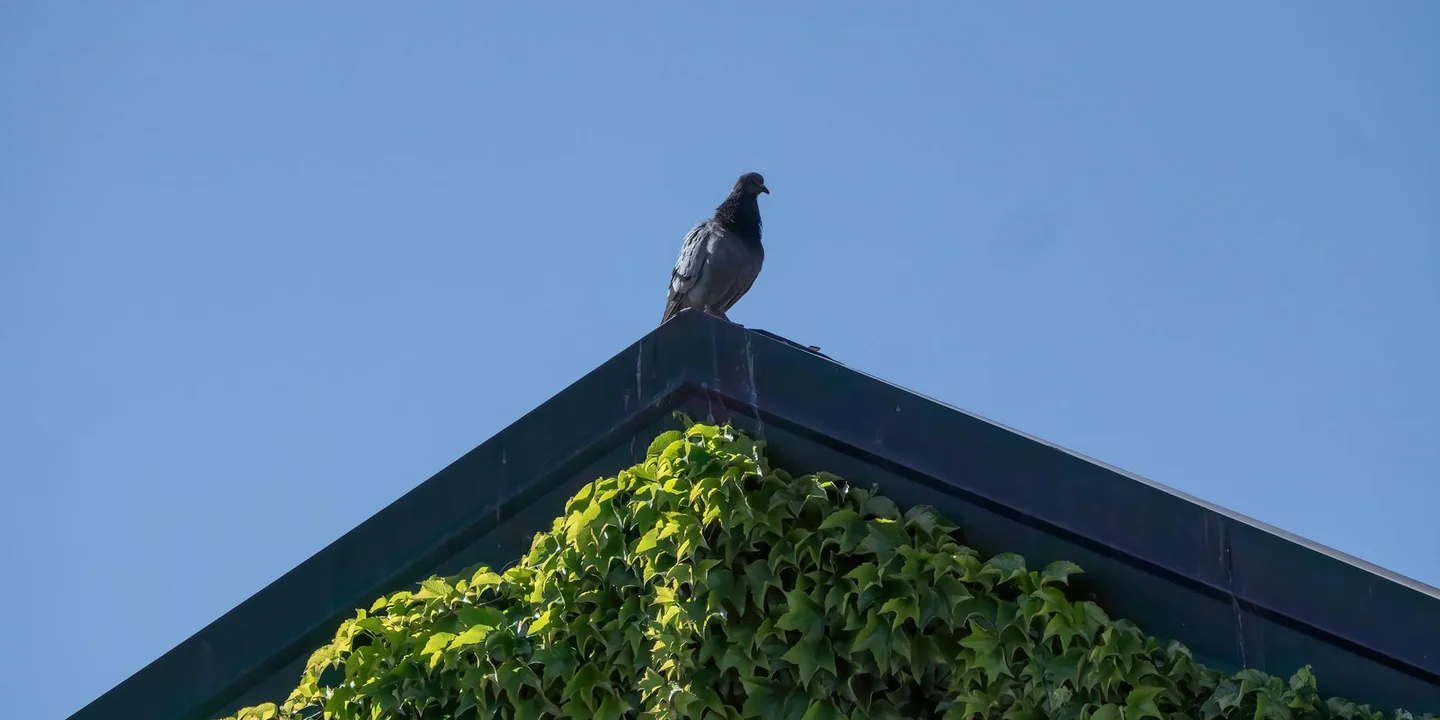
You do not need to climb on your roof to check its health. A safe inspection starts on the ground.
Grab a pair of binoculars and walk around your house. Look for anything that seems uneven, damaged, or out of place. From inside, go into your attic on a bright day. Turn off the lights and look for any pinpoints of sunlight coming through the roof deck.
This simple checkup shows you what to watch for and when to act.
Normal Wear (Plan for Future Replacement)
These are signs your roof is doing its job but is entering its later years. You should start budgeting for a replacement in the next few years.
- You find a small amount of sandy granules in your gutters. This is normal, especially after a storm on a roof that’s a few years old.
- Shingle edges show a very slight, uniform curl or wear. Think of it like the soles of your favorite shoes wearing down evenly.
- The color has faded from a deep black to a more grayish tone. This is expected from sun exposure and doesn’t affect performance.
- Isolated, minor cracks on a few shingles that are over 15 years old.
Seeing these signs means your roof is aging gracefully, but its warranty clock is ticking down.
Red Flags (Call a Pro Now)
These signs indicate active failure. They threaten your home’s interior and structure.
- Multiple missing, cracked, or broken shingles in one area.
- Large, dark streaks or patches on your roof’s surface from the ground. This often means the underlying wood deck is wet and rotting.
- Any sagging or dips in your roofline. This is a major structural warning.
- You see daylight through the roof boards from your attic. That’s a direct path for water.
- Widespread cracking, blistering, or severe curling across many shingles.
- Moss or algae growth that lifts shingle edges, creating pockets for water.
If you spot any one of these red flags, schedule a professional inspection immediately. Water damage works fast.
Here is a simple rule I give my clients. If you have more than a few isolated issues, or any signs of structural concern, the entire system is likely compromised.
The RoofMason Material Verdict: Comparing Your Best Options
Choosing a new roof material is a balance of budget, looks, and how long you plan to stay. Here is my breakdown of the three most common tiers. To help you compare and choose the best roof shingles materials, I’ll outline the pros and cons of the most common options. This sets up a clear, side-by-side comparison in the next steps.
Asphalt Shingles (The Value Workhorse)
- Cost: Lowest upfront cost.
- Weight & Structure: Lightweight, suits almost any existing home.
- Fire & Hail: Good fire resistance with Class A ratings. Impact resistance varies by quality (look for UL 2218 Class 4).
- Climate Fit: Works in most climates, but lifespan shortens in extreme heat or constant freeze-thaw cycles.
My take: Architectural shingles are the best bang for buck for most suburban homes. You get a 30-year lifespan, decent durability, and a wide range of styles without a premium price.
Standing Seam Metal (The Durable Performer)
- Cost: 2-3 times the cost of a premium shingle roof.
- Weight & Structure: Very lightweight, often lighter than shingles.
- Fire & Hail: Excellent fire resistance. Hail can dent but rarely punctures.
- Climate Fit: Ideal for snowy regions (sheds snow easily) and areas with high wind. Reflects sun in hot climates.
My take: For a forever home in a harsh climate, it’s a top performer. The 50+ year lifespan justifies the cost. I recommend it for modern farmhouses, cabins, and homes in wildfire-prone or high-wind zones.
Slate/Tile (The Lifetime Investment)
- Cost: The most expensive option, often 4-5 times the cost of shingles.
- Weight & Structure: Extremely heavy. Your home’s framing must be evaluated by an engineer to support it.
- Fire & Hail: Virtually impervious to fire. Concrete tile and slate are highly impact-resistant.
- Climate Fit: Excellent in most climates, but freeze-thaw cycles can crack lower-quality tiles.
My take: This is a 100-year roof for a historic or high-end estate. The investment is massive, but so is the longevity and classic curb appeal. Make sure your budget includes structural reinforcement.
The Seasonal Maintenance Log: Extend Your Roof’s Life by 5-10 Years
Think of this as a yearly checkup for your roof. A little routine care prevents giant repair bills. I’ve seen well-maintained roofs outlive their warranties by a decade.
Spring
- Check for damage from winter storms. Look for missing shingles or damaged flashing from the ground.
- Clean your gutters and downspouts completely. Clogged gutters cause water to back up under the roof edge.
- Inspect the metal flashing around chimneys, vents, and skylights for any signs of lifting or rust.
Summer
- Trim back tree branches that hang over or touch the roof. They scratch shingles and drop debris that holds moisture.
- Ensure your attic ventilation is working. From the ground, you should feel air flowing out of your ridge or soffit vents on a warm day. A hot attic bakes shingles from underneath.
Fall
- Clean gutters again. This is the most important cleaning to prevent winter ice dams.
- Ensure downspouts extend at least 5 feet away from your foundation to direct water away from your home.
- Look for any new granule loss in gutters as a sign of wear.
Winter
- Use a roof rake from the ground to safely remove excess snow buildup (over 12 inches) from your roof’s edge.
- Watch for ice dams, which are ridges of ice that form at the roof edge. If you see them, your attic is likely too warm. Address the ventilation and insulation in the spring.
If you are not comfortable on a ladder, hire the gutter cleaning out. A fall is far more expensive than the service call. This simple calendar is what separates a roof that fails early from one that protects your home for its full lifespan.
Understanding Roof Warranties: What’s Actually Covered and For How Long?
You bought a new roof. The salesperson talked about a 50-year warranty. That sounds great. But what does it actually mean for your wallet when a problem pops up? Let’s clarify the two main types.
A manufacturer’s warranty covers the roofing materials themselves against defects. Think of it like a warranty for a car part. If the shingles crack or lose granules prematurely, the manufacturer might replace them. However, it doesn’t cover the labor involved in repairing or replacing the roof. For coverage that includes repair labor, you might want to consider a home warranty plan.
A workmanship warranty covers the installer’s labor and the quality of their work. This is from the roofing company, not the shingle maker. If they nail something wrong and it leaks, they should fix it.
You absolutely need both a strong manufacturer’s warranty and a solid workmanship warranty to have complete protection.
How Long Are Most Roof Warranties?
There’s no single answer. It depends completely on the material.
- Asphalt Shingles: Standard warranties are 25 to 30 years. “Lifetime” or 50-year warranties are common for premium architectural shingles.
- Metal Roofing: Paint finish warranties often run 30 to 40 years, with the panel itself sometimes guaranteed for 50 years.
- Tile & Slate: These can have warranties of 50 years or more due to their incredible durability.
The clock on a manufacturer’s warranty starts the day the materials leave the factory, not the day they are installed on your house. If shingles sat on a supplier’s shelf for a year, you’ve lost a year of coverage.
Prorated vs. Non-Prorated: The Big Difference
This is the most critical detail to understand. Most long warranties are prorated.
A prorated warranty loses value over time. Imagine your phone battery. After five years, it doesn’t hold 100% of its original charge. A prorated warranty works the same way. If you need a replacement in year 20 of a 50-year warranty, the manufacturer might only cover a percentage of the material’s current value, not the full cost.
A non-prorated warranty, sometimes called a full replacement cost warranty, does not depreciate. If the material fails during the full-replacement period, they cover 100% of the cost for new materials. This period is usually the first 5 to 10 years of a longer warranty.
Always ask, “What is the full replacement cost period?” That number is far more important than the big, flashy lifetime number.
The Hard Truth About Warranties
Here’s the lesson I’ve learned on hundreds of jobs. A warranty is only a piece of paper. Its real value comes from the installer.
The warranty is only as good as the roofer who installed it. Improper installation voids most manufacturer warranties instantly. The manufacturer will send an inspector. If they see a shortcut, your claim is denied.
Common installation mistakes that void coverage include:
- Using too few nails, or nailing in the wrong place on the shingle.
- Not installing the proper underlayment, ice and water shield, or starter shingles.
- Inadequate roof ventilation, which causes heat buildup and premature aging.
- Ignoring the manufacturer’s specific instructions for your climate zone.
I’ve seen beautiful, expensive shingles ruined in five years because the crew didn’t follow the basic rules. The homeowner was left holding the bill.
Protect Your Investment
Your contract and warranty documents are your only proof. Keep them safe.
File them with your home insurance paperwork and other critical records. Take a photo and save a digital copy in your email or cloud storage. You might need them 15 years from now when the roofing company has changed its name or the original manufacturer has been bought out.
Your roof is a system, and the warranty is its backup plan. Knowing how that plan works before you need it is the smartest roof care you can do. Debunking common roof care myths can also help you maintain your roof better.
Common Questions
What’s the single most important thing I can do to make my roof last longer?
Ensure proper attic ventilation. A hot, stagnant attic bakes shingles from underneath, cutting their life short. Your first step is to check that soffit and ridge vents are clear and functional.
I just had a bad hailstorm. What should I do right now?
First, do a safe ground-level inspection for obvious damage like dented vents or missing shingles. Then, call a reputable, local roofer for a professional inspection before filing any insurance claim-they can document the damage correctly.
How do I know if I need a full replacement or just repairs?
Age and pattern are key. Roof age is a practical factor to consider as you assess condition. If your roof is near its lifespan limit and you’re finding issues across multiple areas, replacement is more cost-effective. Isolated damage on a younger roof can often be repaired.
Final Thoughts on Roof Longevity
From my decades on roofs, I tell every homeowner this: your roof’s lifespan depends most on your commitment to simple, yearly inspections. Schedule a professional check-up each spring to spot minor issues before they escalate into major, expensive damage. A common ‘lifetime warranty’ myth can mislead homeowners—most warranties exclude wear, improper maintenance, and labor costs. Real protection comes from consistent care and understanding exactly what your warranty covers.
Own your role in roof care by always prioritizing safety; never climb onto a steep pitch yourself for a repair. Keep building your practical knowledge through trustworthy guides on Roof Care, All Types of Roof Guide, Care, and Maintenance to make confident, long-term decisions for your home.
Ray is an experienced roofer. He has worked as a general contractor in the roofing industry for over 15 years now. He has installed and repaired all kinds of roofs, from small houses to large mansion, and from basic shingles to cement and metal roofs and even solar roof panels. He has seen homeowners struggle with roofing questions and always has experience based proven advice to help those in need. If you need roof pros, Ray's your guide.