
How to Measure Your Roof for Shingles from the Ground or Google Maps
After thirty years of roofing, I still see homeowners guessing at shingle amounts or risking a ladder climb. What if you could measure your roof safely and accurately without ever leaving the ground?
You can get a solid estimate for your shingle order using simple math from your yard or a free online tool. I’ve used both methods to quote jobs and save time for countless clients.
I’ll explain the step-by-step ground method I use on every estimate.
You’ll see how to pull precise measurements from Google Maps.
I’ll show you how to turn those numbers into the shingle squares to buy.
Key Takeaways Before You Start
Getting a good roof measurement is about smart estimating, not chasing perfection.
- Every method has a margin of error, usually between 5% and 15%. Your goal is a solid estimate, not a perfect number.
- Safety is non-negotiable; this guide is for planning and budgeting from the ground, not a substitute for a professional’s on-roof inspection.
- Briefly, here are your two main paths: Measuring from the ground is best for simple, single-story roofs you can walk around. Using Google Maps or satellite imagery is better for complex shapes, multi-story homes, or when you can’t see all roof sections clearly.
When You Should NOT Try to Measure Your Own Roof
Knowing when to stop is just as important as knowing how to start.
- Steep, complex, or multi-story roofs are immediate “call a pro” situations. If you look up and feel uneasy, listen to that feeling.
- Specific safety hazards rule out any DIY measurement attempt:
- A roof pitch steeper than 6/12 (that’s a 6-inch rise for every 12 inches of run).
- You suspect rotten or soft sheathing under the shingles.
- The roof surface is wet, mossy, or covered in algae.
- Power lines run close to or over the roof edge.
- If you need a precise number for an insurance claim, a final material order, or a contractor’s contract, hire a licensed roofing contractor. They carry the liability for that final, accurate measurement.
The Ground-Up Method: Tools and First Steps
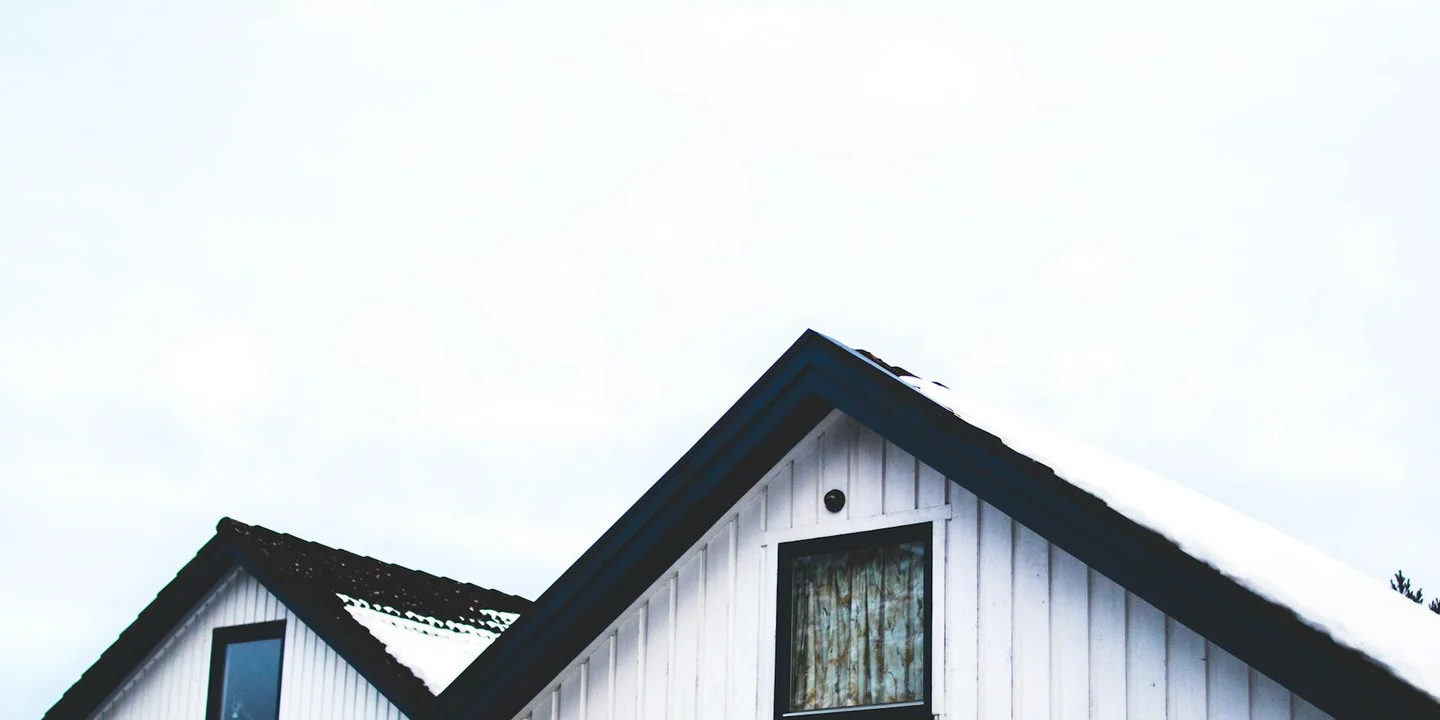
You can get a solid measurement without ever stepping on the roof. Safety is the priority. I keep my feet on the ground and use a few basic tools every homeowner already has or can get easily.
- 100-foot tape measure: A long tape lets you measure entire wall lengths in one go.
- Notepad and pencil: A clipboard helps on windy days. You’ll sketch and jot numbers here.
- Calculator: Your phone’s calculator works perfectly.
- Ladder: This is for reaching the eaves to check the roof’s pitch, not for climbing up. Your ladder gives you safe access to take one key measurement, not permission to walk on the roof.
Start by walking around your house. Look at it from each side. Your goal is to draw the “footprint” of your house, which is the shape it makes on the ground if you looked straight down from the sky. Think of it like the outline of a shoe.
Measure the length of each exterior wall from one corner to the next. Write each measurement on your notepad as you go. If you have a bump-out like a porch or garage, measure those walls separately. For now, just get the lengths of every straight wall section that has roof over it.
Your Essential Tool: The Roof Sketch
Now, turn your notes into a simple drawing. Don’t worry about being an artist. I’ve drawn these on scrap plywood at job sites. Draw a basic shape representing your house’s footprint.
Label each side with its measurement and a direction. For example: “North side: 48 feet,” “West side: 32 feet.” This helps you keep everything straight later.
Here is the key step. Look at your simple footprint drawing. Now, draw lines on it to break your roof into separate planes. Most roofs are just a collection of rectangles and triangles. A simple gable roof is often just one big rectangle. An L-shaped house is two rectangles. Draw these divisions right on your sketch.
Each rectangle or triangle you draw on your footprint represents one individual slope or section of your actual roof. This sketch is your map. It turns a complicated 3D roof into simple, flat shapes you can calculate.
How to Find Your Roof’s Pitch Without Leaving the Ground
Pitch is just a fancy word for how steep your roof is. Think of it like a ratio. For every 12 inches the roof goes horizontally (the run), how many inches does it rise vertically (the rise)? A common pitch is 4/12. That means for every foot out, the roof goes up 4 inches.
You need this number. It changes your final square footage.
The Ladder and Level Method
This is the old-school way I’ve used for years. You need a ladder, a level, and a tape measure.
- Place your ladder safely at the end of a gable (the pointed side of your roof).
- Hold a 2-foot or longer level perfectly horizontal against the roof surface, right at the eaves.
- When the bubble is centered, measure exactly 12 inches out from the roof along the level and make a mark.
- Now, measure straight down from that mark to the roof surface. That vertical distance in inches is your “rise.”
The number you get, like 5 inches or 7 inches, is the first part of your pitch ratio (5/12 or 7/12).
A Simpler, Safer Alternative
If you have attic access, you can often skip the ladder. Go into your attic and find the underside of the roof deck or a rake board (the angled board at the roof’s edge).
Download a free pitch gauge app on your smartphone. Hold your phone flat against that angled surface. The app will give you a pitch reading. I’ve checked these against my tools, and they are surprisingly accurate for a DIY measurement.
Why Pitch Matters for Your Shingle Calculation
Your house’s footprint might be 1,500 square feet. But your roof is not a flat ceiling. It’s angled. A steeper slope creates more surface area than the flat footprint below it.
Imagine wrapping paper on a gift. A flat box needs less paper than a tall, peaked box of the same base size. Your roof is the same.
Using the Pitch Multiplier
Professionals use a “pitch multiplier” to fix this math problem. You find your roof’s footprint area, then multiply it by a set number based on your pitch. That’s where roof pitch calculation comes in. A quick pitch calculation helps translate footprint area into the actual roof surface you’ll cover.
Here is a quick reference table for common residential pitches:
| Roof Pitch | Multiplier |
|---|---|
| 3/12 | 1.031 |
| 4/12 | 1.054 |
| 5/12 | 1.083 |
| 6/12 | 1.118 |
| 7/12 | 1.158 |
How it works: Let’s say your home footprint is 2,000 sq ft and you have a 6/12 pitch. Your roof’s actual surface area is roughly 2,000 x 1.118 = 2,236 square feet. That extra 236 square feet is a lot of shingles you’d miss by just measuring the ground.
Putting It All Together: The Ground Measurement Calculation
Now for the simple math. Think of your house’s footprint as its shadow at noon. You are finding the area of that shadow, then expanding it to account for the roof’s slope.
Follow these two steps in order.
First, measure your home’s footprint from the ground.
- Length: The longest side of the main house section.
- Width: The side perpendicular to the length.
Multiply them: Footprint Length x Footprint Width = Footprint Area. This is your starting number.
Second, account for the pitch. Your roof is not flat. A steeper pitch means more surface area than the flat footprint below it.
Take your Footprint Area and multiply it by the Pitch Multiplier from our earlier list.
Footprint Area x Pitch Multiplier = Estimated Roof Surface Area.
Let’s use a real example. Your house is a 30ft by 40ft rectangle with a 6/12 pitch.
- Footprint Area = 30 ft x 40 ft = 1,200 sq ft.
- Pitch Multiplier for 6/12 is 1.12.
- Estimated Roof Surface Area = 1,200 sq ft x 1.12 = 1,344 sq ft.
See how the pitch added 144 square feet? That’s why we can’t skip this step.
Accounting for Garages, Additions, and Simple Features
Most homes aren’t perfect boxes. You will have extra sections.
Calculate each major section separately, then add them together at the end. Treat a connected garage or a rear addition as its own little house.
Measure its footprint (length x width), find its pitch, and use the multiplier. Add that number to your main house total.
What about the triangular gable ends on a simple roof? You can estimate them.
For a standard gable: the triangle’s area is roughly half of the rectangle it sits in. If the gable wall is 20ft wide and the peak rises 4ft from the attic floor, think of a 20ft by 4ft rectangle (80 sq ft). Half of that is 40 sq ft. This is a small amount, but it adds up on both ends.
Finally, you must account for waste. Shingles are cut to fit hips, valleys, and edges. You will have leftovers.
For a simple gable roof, add 5% to 10% to your final total for cutting waste. For our 1,344 sq ft example, adding 10% (134.4 sq ft) gives you about 1,478 sq ft to order. It’s better to have a few extra bundles than to run short in the middle of the job. The same waste calculation applies when cutting roof rafters for other roof styles, including lean-to and gambrel shed roofs. This helps keep material orders accurate across different roof types.
The Digital Method: Using Google Maps and Satellite Apps
Yes, you can measure a roof from Google Earth or similar tools for a rough estimate, especially when considering metal roofing. I’ve used this method dozens of times to give homeowners a ballpark figure before I ever set foot on a ladder. It’s a fantastic starting point.
Here is the basic process you would follow on a computer using Google Maps or Google Earth. The steps are similar for most satellite tools.
- Find your home on the satellite view. Zoom in as close as you can for the clearest image.
- Locate the built-in measuring tool. In Google Earth, it’s a ruler icon. In Google Maps on a computer, right-click your starting point and select “Measure distance.”
- Trace each roof plane individually. Click at each corner of a rectangular section. For complex shapes, use the polygon tool to click around the entire perimeter.
- Note the measurement for each plane. The tool will give you a total area in square feet or meters.
- Add all the plane areas together to get your total roof footprint.
The key is to measure each flat section, or plane, one at a time, just like we do from the ground. Don’t just trace the overall outline of your house from above, as that will miss the extra surface area created by the roof’s slope.
Using Google Maps on a computer is the most common free method, but dedicated mobile apps exist. Apps like Hover or RoofSnap are designed for contractors and use more advanced imagery. They can automatically account for pitch if you input it, but they often require a subscription. For a one-time DIY estimate, the free browser tools are your best bet.
The Major Limitations of Satellite Measurements
Satellite tools are helpful, but they are not perfect. I learned this the hard way on an estimate for a cabin surrounded by tall pines. The measurement was useless.
Image distortion is a big issue. Satellite photos are stitched together, and the edges of the image can warp, like a subtle funhouse mirror. This can stretch or shrink the dimensions of your roof by several feet, throwing your square footage off.
The image you’re looking at might be years old. I’ve had clients get an estimate, only for me to arrive and see a new dormer or sunroom that isn’t on the satellite photo. If you’ve done any renovations, the old image won’t show them.
Tree cover, heavy shadows, and low-resolution images can make tracing impossible. If you can’t clearly see the roof edges, you cannot get an accurate measurement, period. This is the most common deal-breaker I see.
The most critical limitation is pitch. Satellites look straight down. They measure the footprint, not the actual slanted surface. You must still determine your roof’s pitch from the ground and apply the pitch multiplier to your satellite-measured footprint. If you skip this step, your shingle estimate will be far too low.
How Roof Features Change Your Shingle Count
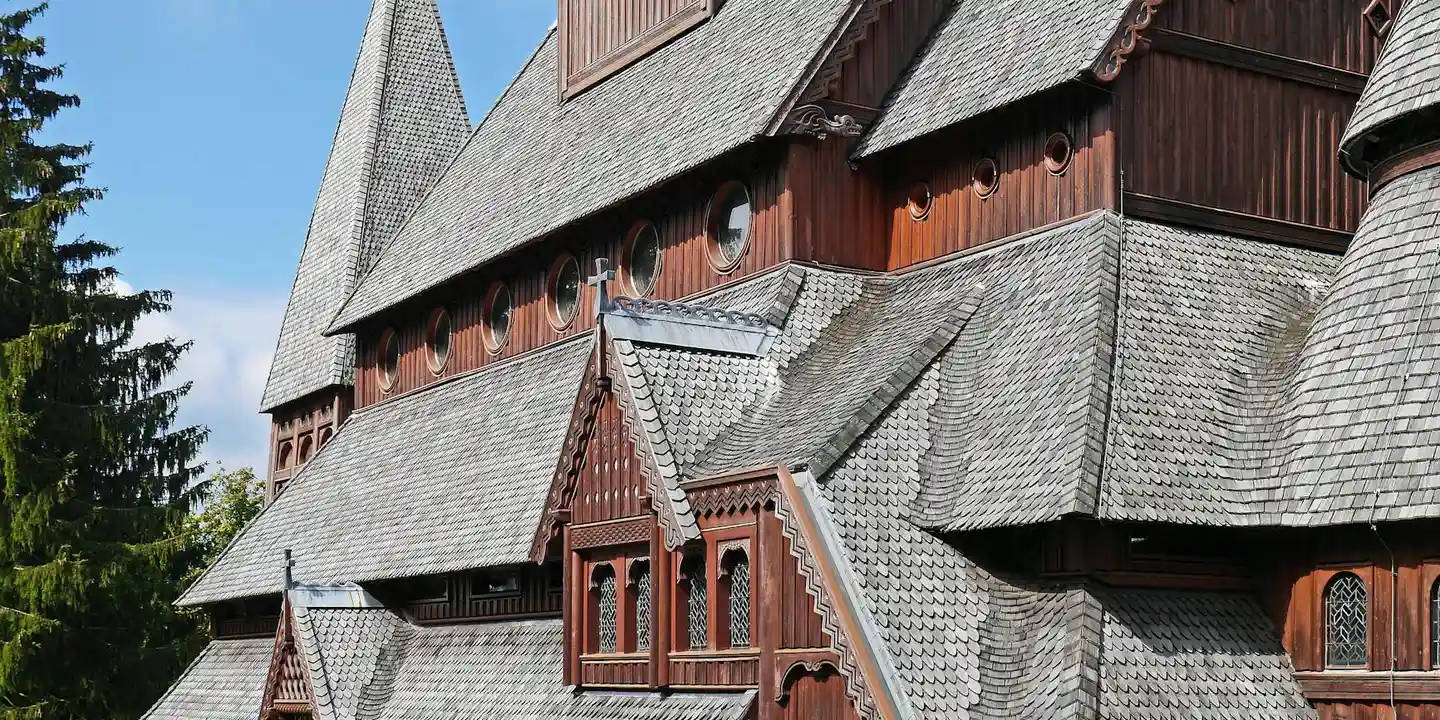
If your roof is a simple box, your ground or map measurement gets you close. Most roofs aren’t simple boxes. Think of features like valleys, dormers, and hips as folds in a piece of paper. To cover them, you have to cut the shingle material to fit the shape, so you might need extra shingles to cover the roof.
Every cut creates waste. A valley, where two roof planes meet inward, requires precise cutting and weaving of shingles. A dormer, that little window box sticking out of the roof, means cutting shingles around its sides and top. Hips, the sloped ridges at the corners, need specially cut shingles.
The more cuts and intersections your roof has, the more shingle material you waste, and your simple square footage number won’t account for that. On the ground, you can count these features, but you can’t easily calculate their waste factor. That’s where rules of thumb from experience come in.
After decades of ordering materials, we add a “waste factor” to the total square footage. Here’s how I break it down for estimates:
- Simple Roof (10% waste): A basic gable or hip roof with no valleys, no dormers, and few penetrations like vents.
- Medium Complexity (15% waste): Roofs with a couple of valleys, one or two dormers, or multiple hips. This covers most suburban homes.
- Complex Roof (20%+ waste): Roofs with multiple valleys intersecting, several dormers, turrets, or lots of small, intersecting planes. Older Victorian homes often fall here.
I once underestimated a complex Craftsman home with cross-gables at 15%. We ran short because the intersecting valleys used more material than I’d planned. We added 5% to the order and haven’t made that mistake since.
A Note on Flashing, Starter, and Ridge Cap
Measuring for shingles, what we call “field shingles,” is only part of the shopping list. A roof system has specialized parts that protect its weak points. These are sold by the linear foot, not the square.
You must account for these critical components separately, or you’ll be left with a vulnerable roof.
- Drip Edge: The metal L-shaped trim that goes along the eaves and rakes (the bottom and side edges). You measure the total length of all your roof edges.
- Starter Strip: A special first row of shingles that seals the eaves. Never skip it. It runs along the length of all your eaves.
- Ridge Cap: The shingles that cover the peak of your roof. You measure the total linear feet of all your ridges and hips.
- Valley Metal: If using metal liners for valleys, you measure each valley’s length.
While you can measure roof planes from afar, getting the exact linear footage for these parts is tricky from the ground. A soffit might hide the eave length. Ridge lines can be deceptive.For a truly accurate material list, a professional needs to walk the roof perimeter and peaks during an onsite inspection. This is how we prevent leaks from day one.
Converting Your Measurement to Shingle Squares and Bundles
Once you have your total roof area in square feet, you need to translate that into the language of roofing materials. Roofers don’t order shingles by the “square foot.” They order them by the “square.”
A roofing “square” is not a shape. It’s a unit of measurement equal to 100 square feet of roof area. Think of it as a 10-foot by 10-foot section of your roof. This single term is the key to talking the same language as your supplier and getting your material order right.
The Basic Conversion Formula
The math here is straightforward. Take the total roof area you calculated and divide it by 100.
Total Roof Area (sq ft) ÷ 100 = Number of Squares Needed
For example, if your ground or satellite measurement gave you a total of 2,300 square feet, you would calculate: 2,300 ÷ 100 = 23 squares. That’s the number you’ll give when getting a quote.
From Squares to Bundles
Shingles are packaged in bundles, not loose squares. This is where many DIYers get tripped up, because the number of bundles in a square depends on the shingle type. The next section breaks down how many bundles make up a roofing square for common shingles. This will help you estimate materials more accurately and plan your purchase with confidence.
- 3-Tab Shingles: The traditional, flatter style. It almost always takes 3 bundles to cover one roofing square (100 sq ft).
- Architectural (Dimensional) Shingles: The thicker, more modern look. These are heavier and typically require 4 bundles to cover one square.
I always tell my crew to double-check the bundle coverage printed on the wrapper. Assuming the wrong bundle count is a sure way to come up short on material halfway through the job.
Your Final Calculation
Now, put it all together to find your total bundle count. Let’s use our example of a 23-square roof.
If you’re using architectural shingles (4 bundles per square):
23 Squares x 4 Bundles per Square = 92 Bundles Needed
If you’re using 3-tab shingles (3 bundles per square):
23 Squares x 3 Bundles per Square = 69 Bundles Needed
This final number is what you’ll actually pick up or have delivered. Always add 10% to this final number for waste from cuts, starter course, and ridge cap. For that 92-bundle order, I’d round up and get at least 101 bundles to be safe.
How Accurate Are These DIY Estimates Really?
Let’s be honest about the numbers you can get from the ground or a computer. They are estimates, not exact figures.
Your ground measurement is a solid starting point, but it will likely be off by 10 to 15 percent if you are meticulous. Think of it this way: you’re measuring the house’s footprint, not the roof itself. You can’t see every valley, dormer, or the exact steepness of each slope from down here. That missing third dimension is where the error creeps in.
Satellite Image Pitfalls
Using Google Maps or a roofing calculator feels high-tech. The accuracy, though, is all over the map. For a simple, open roof with a perfect, recent satellite image, you might get within 5 percent.
For most homes, the satellite method swings between 5 and 25 percent off because of image quality and roof complexity. I’ve seen estimates ruined by tree shadows hiding edges, low-resolution blur, or software that completely misinterprets a hip roof. The algorithm makes a guess, and sometimes it’s a very bad guess.
How a Pro Gets It Right
This is why I always measure twice from on top. A professional doesn’t guess the third dimension. They measure it directly.
A pro with a laser measure on the roof itself can achieve an accuracy of 1 to 2 percent. They walk every plane, account for every rake edge and penetration, and add precise waste factors for cutouts and starter courses. They are buying the shingles, so their number has to be right.
The Bottom Line for You
Your DIY square footage has one good job. It prepares you for conversations with contractors.
Use your calculated number strictly for budgeting and comparing initial quotes, never for ordering the final shingle count. Hand your estimate to a roofer and say, “This is what I came up with from the ground. What do you get from your measurements?” The difference in their answer will tell you a lot about their thoroughness.
When It’s Time to Call a Professional Roofer
Measuring from the ground or a map gives you a solid ballpark figure. That’s great for planning a budget or a DIY repair on a simple shed.
But for your main house, there are clear signs you should bring in a pro.
- Your roof is complex. Multiple sections, steep valleys, dormers, or intricate hips turn a simple rectangle into a geometry puzzle. I’ve seen homeowners with great ground measurements still come up two squares short on materials for a roof with three cross-gables.
- Safety is a concern. If your roof is steep or high, the risk of a fall isn’t worth it. A simple ground measurement is one thing; climbing up to verify slopes is another.
- You need a formal document. Insurance companies or financing often require a detailed, professional measurement and material takeoff. A sketch on notebook paper usually won’t cut it.
- You’re ready to buy materials. This is the biggest reason. An error of just 10% on a material order can cost you hundreds, create huge delays, and leave you scrambling. Wasting shingles hurts your wallet. Running out shingles halts the entire job.
What a Professional Roofer Actually Does
When I do a formal roof measurement for a client, it’s about far more than just square feet. Here’s what you’re really paying for.
We take precise, direct measurements. We walk the roof with a measuring wheel or laser, getting exact lengths and pitches. We account for every ridge, hip, valley, and penetration.
We inspect the decking. While we’re up there, we’re looking for soft spots, rot, or damage that needs repair before new shingles go down. This can change the job’s scope and cost.
We identify underlying issues. A trained eye spots things a homeowner might miss: failing flashing, improper ventilation, or inadequate underlayment. Catching these now saves major headaches later.
We provide a detailed material takeoff. This isn’t just “30 squares of shingles.” It’s a list: exact squares of shingles, lineal feet of drip edge and ridge cap, squares of underlayment, number of vent pipes, and counts of ice & water shield rolls. My old foreman called it the “grocery list” for the roof. A good one ensures nothing is forgotten.
Realistic Cost Expectations
Many homeowners are surprised to learn that a professional roof measurement often doesn’t have a separate charge.
For a roof replacement project, nearly all reputable contractors include the detailed measurement and inspection as part of their free estimate. They need those precise numbers to give you an accurate quote. The cost of the measurement is baked into the overall job price if you hire them.
If you only want a standalone measurement and material list without planning a full replacement, some roofers will do it for a fee. This is less common. Expect to pay a service call charge, often between $150 and $300, depending on your location and the roof’s complexity. Think of it as buying an insurance policy against a wrong material order.
My advice? If you’re serious about a repair or replacement, get two or three estimates. Each roofer will do their own measurement. This gives you confidence in the scope and allows you to compare detailed proposals, not just bottom-line prices.
Common Questions
How accurate is my DIY ground measurement for ordering shingles?
Expect a 10-15% margin of error. Use your number strictly for initial budgeting and to vet contractor quotes, never for the final material order.
When is using Google Maps for a roof measurement a bad idea?
It’s a bad idea if tree cover, shadows, or a low-resolution image obscure the roof edges. Also, if the satellite image is older than any recent renovations, the data will be wrong.
I have my measurement; when should I absolutely call a pro?
Call a professional roofer when you’re ready to purchase materials or if the roof is steep, complex, or multi-story. Their on-roof measurement ensures accuracy and identifies hidden issues like rotten decking.
Your Blueprint for a Successful Roof Project
An accurate measurement is the most important number on your roofing estimate, whether you calculated it from the ground or a satellite image. Nail this step first, and you’ll order the right amount of shingles every time, saving money and reducing waste from the start.
Treat this skill as the foundation of responsible roof ownership, where safety and proactive care are always the priority. Prioritizing roof repair safety practices protects you and your home during maintenance. Keep learning about roof care for all types of roofs to make informed decisions that protect your investment and your home’s weather-ready integrity.
Ray Huffington
Ray is an experienced roofer. He has worked as a general contractor in the roofing industry for over 15 years now. He has installed and repaired all kinds of roofs, from small houses to large mansion, and from basic shingles to cement and metal roofs and even solar roof panels. He has seen homeowners struggle with roofing questions and always has experience based proven advice to help those in need. If you need roof pros, Ray's your guide.